
Construction of Identity in a Digital World.
Think back to a time when you were placed in a social situation. How did you act? How did you talk and present yourself? Was it the same way as the online version of yourself? I can guarantee it wasn’t. In this digital day and age people are trained into thinking that they have to act a certain way to appear as ‘appealing’, ‘cool’ or ‘likeable’, and wether you realise or not, everyone conforms to this to an extent.
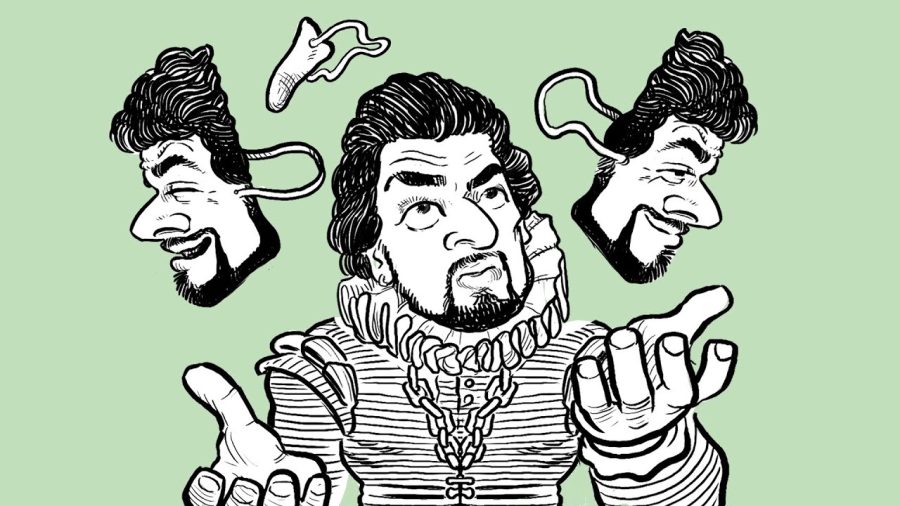
Sociologist Erving Goffman (1959) established the theory of dramaturgy, stating that social interactions can be viewed as a performance, where individuals are like actors on a stage playing different roles. His theory suggests that people engage in “impression management” to control how others perceive them, separating their front stage (public performance) from their back stage (private preparation). It is also key to know that it is not always a conscious performance; it can be an unthinking habit that is part of the social process.
Social media has become a huge stage for people to perform on. No matter your background, time zone, personal situation or home life, if you have access to the internet you can post whatever you like to make it seem like your life is one way when it may be the complete opposite. Every like, share, repost and save contributes to this performance, the same as a standing ovation would, and further pushes the individual to keep up this online persona they’ve created because, as we all know, its nice to be liked. Everyone you know will have an online presence, and the majority will be different to their ‘in person’ persona. Wether they post on Instagram for the aesthetic, pose on TikTok for the likes, or on Snapchat for the views, none of it is real and none of it portrays their true personality’s.
We’ve all heard of the argument, what defines one’s identity? Is it the way you look, speak, where you’re from? Before we gained access to digital platforms, one’s identity was defined by simple points such as family, culture, religion, community and interactions, but ever since the fast-paced world of social media was introduced this definition has shifted drastically. We have been handed the tools to change, improve, and question our identity’s proving that the definition isn’t fixed, and everyone’s identity is fluid. Whether you believe this is for the better or for the worse, it has broken down the boundaries between real life and online, leaving individuals with the ability to constantly build on their own sense of self. It can then be argued that Goffman wasn’t entirely correct with his theory, and that if anything, social media has improved individuality.
Every conversation has two sides, and like individuality, this one is up to individual interpretation.
References:
Goffman, E., 2004. The arts of impression management. Organization identity: A reader, pp.35-55. Accessed: 07/11/2025
https://compass.onlinelibrary.wiley.com/doi/10.1111/spc3.12940. Accessed: 07/11/2025


I also appreciated your point about identity being fluid in the digital age. Before social media, I would have defined my identity mostly through family, culture, and local community, but now it feels like we have tools to experiment with who we are and who we want to be. It’s fascinating how this ability to constantly build on ourselves can both empower individuality and blur the line between “real” and “curated.” Your post made me reflect on my own online behaviour and how different my digital self is from my offline self.
I’m curious, though — do you think the pressure to perform online ever limits authenticity, or does it mostly encourage creativity and self-expression? Either way, your post definitely made me feel more critically about how I present myself in both worlds.
I’d say I think it’s a 50/50 split. I believe it fully can limit authenticity, as the online world can be so fake. People are constantly competing to be the best at something – dancing, modelling, singing, art work etc. It’s one big game that people take part in and I think some people let that eat away at who they really are. But on the other hand, I believe it also creates a space for people to be authentic in a way that maybe they don’t feel comfortable to/aren’t able to do in real life. Through niche communities, online zones and just the general online world, there is a corner for everyone – every niche, interest, like and dislike is covered. All in all, I think thats an interesting question that could be picked apart and spoken about for ages. Thanks for your reply!
This was a good read; it’s a clear and engaging overview of how identity has shifted from being rooted in traditional influences to becoming more fluid in the digital age. Your reflection on how social media provides tools to reshape identity is insightful, and the connection to Goffman adds a thoughtful theoretical angle.