
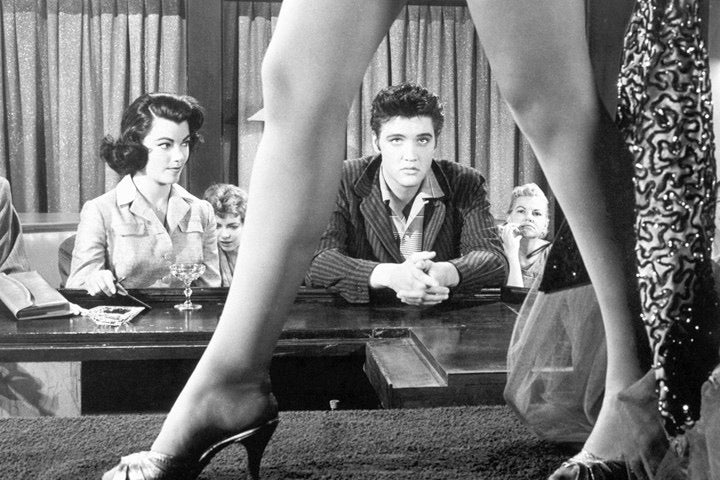
In feminist theory, as well as in media studies, the male gaze refers to a specific mode of perception and representation of the world: one that is based on a masculine, heterosexual viewpoint of objectification of women and a promotion of male desirability. The term is best known to refer to the work of Laura Mulvey, whose 1975 essay explained how mainstream cinema invokes camera, narrative and spectator positioning to depict women as passive objects of visual pleasure – instead of subjects with agency.
As noted, the male gaze is not limited to the filmmaker’s position. It entails three overlapping views: the view of the camera (the way the scenes are framed and women are depicted), the view of male characters in the movie, and the view of the spectator (a heterosexual male) of the final product. These layers allow women in film and visual media to be characterised not by their characters, aspirations, and internal existence, but rather by their looks and sexual attractiveness.
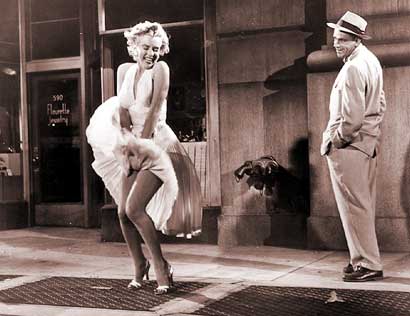
A free summary in a popular magazine explains how the male gaze remains prevalent in modern media. The bodies of women remain to be commodified, designed, and made to be consumed, and this way, women are made to be spectacles instead of human beings who are still complex. The trend is not random but structural: creative industries are still dominated by men who influence storytelling, visual representation, and expectations of the viewers in a gendered manner. There are no purely aesthetic and abstract effects of the male gaze: they have social and psychological consequences. The repeated portrayal of women as objects of desire to gratify men instils too slender and even destructive ideals of beauty, reinforces gender disparity, and leads to the self-objectification of women through the media. These images not only define the way other people perceive women, but also women themselves, who tend to develop problems like dissatisfaction with their bodies, low self-esteem and internalised gender prescriptions.
Meanwhile, in recent years, the male gaze has become increasingly well-known and criticised, not only in films and advertisements, but also on social media and in everyday social life. More authors, particularly women and voices of the marginalised, are trying to resist or subvert this gaze by making women the subjects, rather than the objects; by creating more rounded, active, and layered female characters; and by altering the narrative perspective to question accepted gender norms. Additionally, the emergence of digital media and participatory culture presents new opportunities and challenges. On the one hand, platforms enable more diverse creators to present alternative narratives and challenge dominant representations. On the other hand, newer and more subtle forms of the male gaze can be perpetuated by social media and algorithmic content, such as filters and body ideal trends and popularity scales, which nonetheless prioritise appearance. Critics argue that the rhetoric of representation has evolved, but the underlying power relations have remained essentially unchanged.
In a society where our images, screens, and narratives are becoming increasingly powerful determiners of the way we perceive ourselves and others, the identification and refusal to abide by the male gaze are vital cultural awareness and resistance.
Reference List
Loreck, J. (n.d.) ‘Explainer: what does the “male gaze” mean — and what about a female gaze?’ The Conversation. Available at: https://theconversation.com/explainer-what-does-the-male-gaze-mean-and-what-about-a-female-gaze-52486
Mulvey, L. (1975) ‘Visual Pleasure and Narrative Cinema’, Screen.
Media Studies (n.d.) ‘The Male Gaze’. Available at: https://media-studies.com/male-gaze/
StudioBinder (2021) ‘What is the Male Gaze? Definition and Examples in Film. Available at: https://www.studiobinder.com/blog/what-is-the-male-gaze-definition/
Verywell Mind (n.d.) ‘Understanding the Male Gaze and How It Objectifies Women’. Available at: https://www.verywellmind.com/what-is-the-male-gaze-5118422


This is a clear and well-structured explanation of the male gaze, and I appreciate how you emphasise its layered nature—camera, character, and spectator—as well as the psychological and social consequences that extend beyond media texts. One point that particularly stands out is your discussion of how digital platforms reproduce these dynamics through filters, trends, and algorithmic prioritisation. This highlights how the male gaze has shifted from being solely a representational issue to a participatory one, where users themselves adopt and reproduce the gaze in ways Mulvey could not have anticipated in 1975. It might be interesting to push this further by exploring how TikTok and Instagram create feedback loops: content that aligns with conventional attractiveness receives higher engagement, which in turn encourages creators—regardless of gender—to conform to these norms. This suggests that the contemporary male gaze is not simply a top-down structure imposed by creators or industries, but a system embedded in platform design and algorithmic reward. Your final point about resistance is also compelling. While digital media provides tools for subverting the male gaze, it also commodifies resistance in ways that can dilute its impact—for example, when body-positive content becomes a brand aesthetic rather than a political critique. Overall, this post does a strong job of showing that the male gaze remains culturally pervasive, even as its forms evolve.