
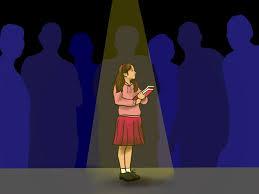
Male gaze theory is a core element in the media industry, introduced by Laura Mulvey in 1975. The essay “Visual Pleasure and Narrative Cinema” breaks down how mainstream film and media often reflect a traditional masculine male perspective, positioning women as objects. Beings who can only be visually appealing and lack depth as human beings. This led to Mulvey claiming that what the audience sees is also something they will adapt to, so the constant showcasing of the particularity results in people in society behaving and thinking negatively towards women.
This theory remains relevant to today’s world; expanding on the initial claim, she breaks it down into three distinct ways. The first is camera gaze, which focuses on overly sexualising the female body, cinematic shots of a woman’s legs, and curves. This encourages objectification and limits what a woman is allowed to do on screen, other than just looking pretty for the camera. Forces the audience to idealise and only have the feelings of desire rather than respect and any other emotion. John Berger supports the claims Laura made in 1972, “Men act, and women appear,” explaining that for an extended period, we’ve been taught to value women solely on their appearance and not on what they do or prefer to do.
The second form is the character gaze. Female characters are often portrayed as passive, submissive, and secondary characters in the main story. Their value is determined by how much they help the male leads throughout the story. The result of this is that the audience falls to the character’s gaze and sees the dynamic between the genders and the power struggle as normal and acceptable. Making society focused on giving men more dominance while ignoring the females’ unique skillset.
Society adapts itself to a male point of view, unconsciously, because of the content it watches. Eventually, when they do see a women as the lead instead of a man, they view her through masculine eyes. Meaning they care more about how beautiful the person is rather than what they want to achieve in their journey. To expand on this further, Bell hooks published a book in 1992, black looks: Race and Representation, creating another layer to the topic of the male gaze. The gaze is also shaped by race and power, but specific groups may resist the gaze rather than simply absorb it.
For instance, an oppressed group of Africans who immigrated to the West wouldn’t align themselves with the same views to a movie starring a black female, such as black Panther 2, as those who were raised in the West and from a young age were exposed to the male gaze. One group of people will sing praises and be observant of the female journey, while the other group will focus on what is highlighted: the female beauty and all.

On the other side of the male gaze is the female gaze, which challenges these common naive narratives; prioritising emotional depth and vulnerability alongside the complexity of identity. Broadening the understanding of gender and femininity, offering the audience a different perspective when watching a media message, and challenging traditional stereotypes and thestatus quo.
The outcome of this is that society adjusts its views on females and, more importantly, its behaviour towards them. No longer simply being lusted after but rather being treated as human. Both John and Laura mentioned that, between the lines, lies the idea of being treated as equals and needing to balance the scales regarding how the media portrays each gender. Disrupting the traditional masculine male viewpoint, the female gaze promotes storytelling and more authentic portrayals of human lives.
Reference:
GradeSaver (2020). Ways of Seeing Study Guide. [online] Gradesaver.com. Available at: https://www.gradesaver.com/ways-of-seeing/study-guide/
Mulvey, L. (1975). Visual Pleasure and Narrative Cinema. Screen, 16(3), pp.6–18. doi:https://doi.org/10.1093/screen/16.3.6.
Bell h. (1992). Race and representation. Available at: https://warwick.ac.uk/fac/arts/english/currentstudents/postgraduate/masters/modules/femlit/bell_hooks.pdf
Antonia Brooks (2022) Dear women don’t let the male gaze change you. Available at: Dear Women, Don’t Let the Male Gaze Change You – The Augur Bit
twssmagazine (2022) The Female Gaze: The Theory Behind the TikTok Trend. Available at:https://twssmagazine.com/2022/06/09/the-female-gaze-the-theory-behind-the-tiktok-trend/


You explain Mulvey clearly without overcomplicating it, and I like that you bring in Berger and bell hooks, it shows you really understand how the male gaze expands beyond just “men looking at women” and such. The way you broke down camera gaze vs character gaze is also really great and easy to follow. Some examples would help ground your points, maybe like naming a specific film scene that shows the camera sexualising a woman, or a female character who exists only to support a male lead. I really enjoyed reading this blog to be honest.
Hi!
You’ve explained Mulvey’s male gaze theory really clearly, and I liked how you connected it with Berger and bell hooks it shows a strong understanding of how gender and race shape the way women are represented. Your breakdown of camera gaze vs. character gaze was especially effective and easy to follow. Overall, your post is insightful, well structured, and offers a thoughtful look at how both the male and female gaze influence society. Great work!