

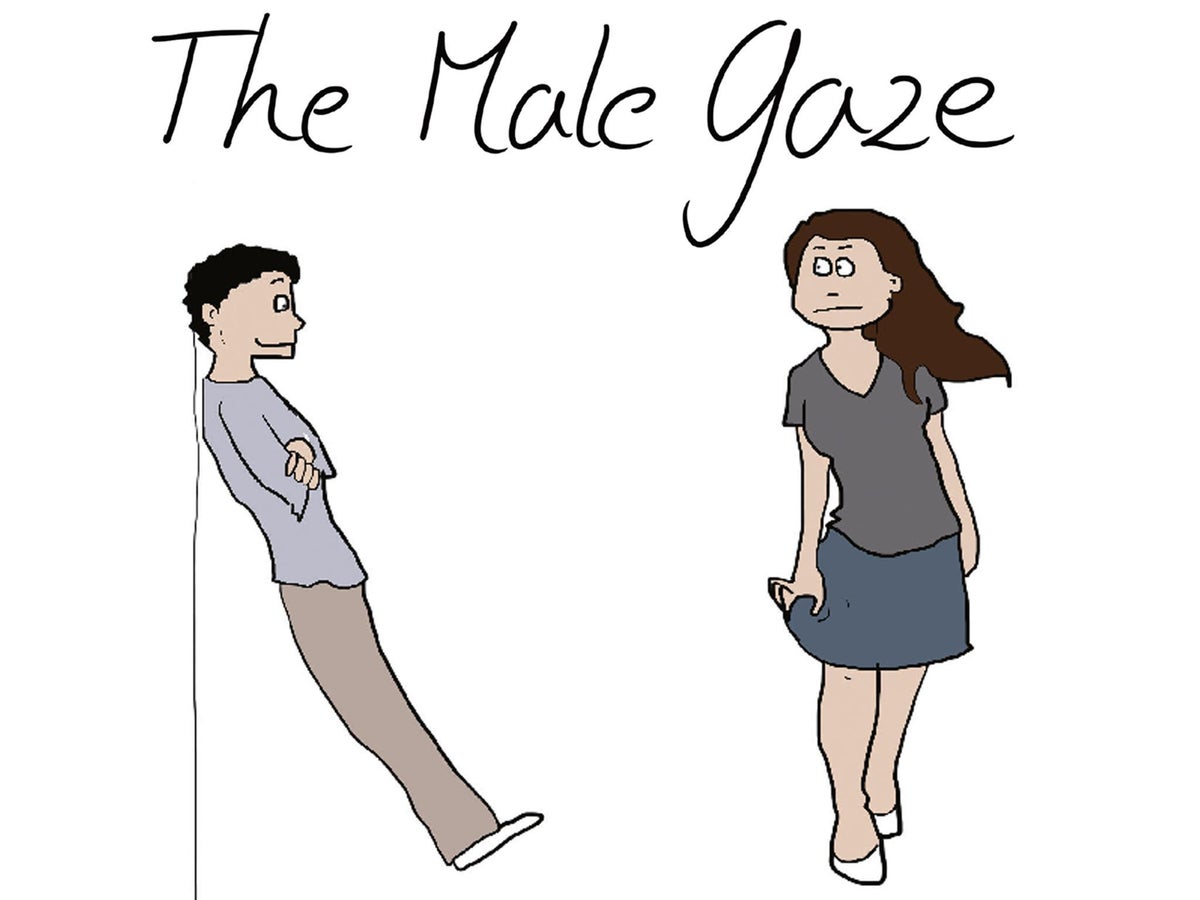
The concept of the “male gaze” was first proposed in 1975 by Laura Mulvey. She contended that many films and visual media were created from a male viewer’s point of view. Through story design, camera angles, and beauty standards, women are objectified. This happens not because one director has an issue, but because our culture has repeated this sense of looking for a very long time. This often results in female characters being reduced to losing their agency and being relegated to roles like “the pretty one,” “the sexy one,” or “the one who supports the male hero.” Although the theory had its origins in film studies, the pattern can now be seen throughout advertising, social media, and even in how algorithms on the internet recommend content.
Superhero movies yield very overt examples. Most early Marvel movies contain female characters that are highly sexualized in the way they were captured on film. For example, Natasha Romanoff’s first entrance in Iron Man 2 contains shots that pan slowly down her body. More time is spent showcasing her figure rather than her skills or personality. This immediately presents to the viewer that she is to be looked at and not someone who advances the story. The posters for The Avengers also drew criticism for the same reason. All of the male heroes are facing forward in powerful action stances, while Black Widow is facing the camera in a way that accentuates the curves of her body. These continued visual decisions in movies make the audience acclimate to being told that a woman’s value is somehow tied into her appearance and how much she appeals to a male.
When women are at the creative helm, the picture often changes. Patty Jenkins’ Wonder Woman is hailed as a great example of eschewing male gaze: the movie does not employ objectifying angles to show the body of the heroine; instead, it focuses on her strength, her choices, and her ability to act. Even in battle scenes, she is a hero, not some sort of device catering to males in the audience. This difference shows that whoever controls the camera has a huge influence on how women are represented.
The male gaze becomes more complicated in today’s digital world because it is not just about directors or producers; algorithms play a significant role. Many social media platforms push for content that gets the most clicks or likes, and such contents tend to fit male-centered beauty preferences. For example, on TikTok, videos showcasing dancing or body-focused contents are mostly given more exposure, which encourages the creators to follow the trend without actually thinking about it. On Xiaohongshu, many fashion posts that get pushed to the top follow “pretty,” “sexy,” or “ideal body” standards. In addition, live-streaming platforms promote beauty filters and “good-looking” female streamers, which maintain the idea that women have to be watched in certain ways. In this sense, the male gaze has expanded: it is no longer just about men looking at women, but also about algorithms teaching us all how to look. An understanding of the male gaze is less about blaming any one movie, but rather about observing how visual culture has constructed our ideas about gender, beauty, and value. When we are able to begin recognizing such patterns, then we can also begin fostering ways of visualizing women that are much more equal and varied. Then, and only then, might women become full subjects of stories—agents who act, make meaning, and create the world around them, not merely objects to be looked at.


Reference:
Mulvey, Laura. “Visual Pleasure and Narrative Cinema.” (1975).
Gill, Rosalind. “Postfeminist media culture.” (2007).
Noble, Safiya Umoja. Algorithms of Oppression (2018).


I want to start off by focusing on the example, Marvel introducing black widow through different shots of her figure. This clearly shows me that you have captured exactly what the male gaze is through the use of camera work. I also want to say I like how you said that Wonder Woman films focus on her strength and ability to act, showing a contrast to the male gaze, making it easier for me to understand the difference.