
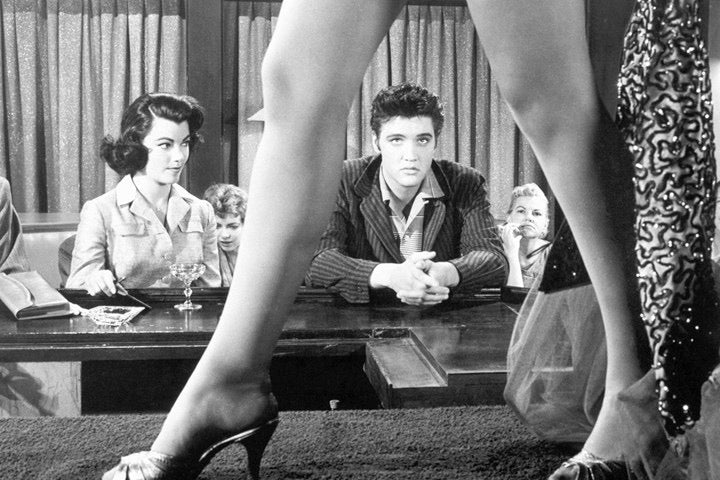
Discourse surrounding the portrayal of women in the media is timeless, and when engaging with them, it’s nigh impossible not to talk about Laura Mulvey. A British feminist filmmaker and theorist, Mulvey redefined ideas surrounding cultural criticism in 1975, releasing her influential essay titled ‘Visual pleasure and narrative cinema’, in which she introduced what she calls ‘The Male Gaze’. She explains how it is a lens, through which the media, specifically Hollywood cinema, encourages us to view the world from the perspective of a heterosexual male. Mulvey exposes how, this isn’t a choice, but a reflection of the patriarchal structures that shape society. Her theory explored the idea that women in the media are positioned on screen as objects, solely to be looked upon for visual pleasure, being framed and narrated in ways that are suited to the desire of men. In contrast, men are often presented as active decision makers, who are strong and capable of driving the narrative forward. Laura Mulvey’s theory is still incredibly influential to this day, remaining relevant and applicable to almost any form of media that is produced, decades after she first introduced it.
Laura Mulvey’s male gaze theory is applicable in contemporary contexts and the media which is produced in them, even though they have evolved far beyond the Hollywood movies she originally critiqued. We’ve moved on to a new era, one ruled by streaming services, influencers and content which has been refined and recommended by algorithms, and yet the male gaze hasn’t just up and left – instead it has adapted. A clear example of this is Megan Fox in the first transformers movie, which is a textbook example of the male gaze in action. In just her first major scene, the camera pans slowly over her body as she works on a car, inviting the audience to view her as an object of erotic spectacle, rather than a character that has agency within the movie. Megan Fox herself also exposed the negative effects the male gaze had taken on her career, shaping how she was treated within the industry, highlighting the damage which the patriarchy has upon women. When analysing the scene with Mulvey’s theory, it becomes more and more evident how the male gaze constantly frames women in ways that provide them with little to no character development, caring more about their desirability than depth. An interesting idea to think about is how discourse surrounding the patriarchy and the male gaze have appeared on social media platforms, where more juvenile, contemporary audiences are constantly discussing and critiquing concepts from decades ago, highlighting how while media landscapes change, the framework which Mulvey provided, will consistently allow us to challenge and understand visual habits we’ve inherited.


This is a very well-written post. Your examples are well-known and relatable to readers and are extremely relevant to the topic at hand. The title you chose is also extremely captivating, and draws readers (such as myself) in immediately. It makes you realise that the jokes and comments about the male gaze run deep and are such a serious issue, one which I feel has been played down quite a bit by men, and even some women, in charge; such as producers and directors. Well done!