

When we watch movies, we usually think we’re just relaxing, escaping, or getting invested in a story. But Laura Mulvey’s “Visual Pleasure and Narrative Cinema” makes you stop and realize that films aren’t neutral at all. They’re built on a whole structure that reflects how society sees gender. In the pages between 802 and 816, Mulvey basically breaks down how Hollywood films create pleasure in a way that lines up with a heterosexual male point of view. And once she explains it, you cannot unsee it.
Mulvey starts by saying she’s using psychoanalysis because it helps explain why looking feels good. She focuses on two types of pleasure that cinema gives us: scopophilia and identification. Scopophilia is basically the pleasure of looking at someone, the act of watching another person as an object. Identification is when we emotionally latch onto a character, usually the main guy, and experience the story through him. These two things together create a kind of viewer position that Mulvey says is coded male, even if the viewer themself isn’t a man.
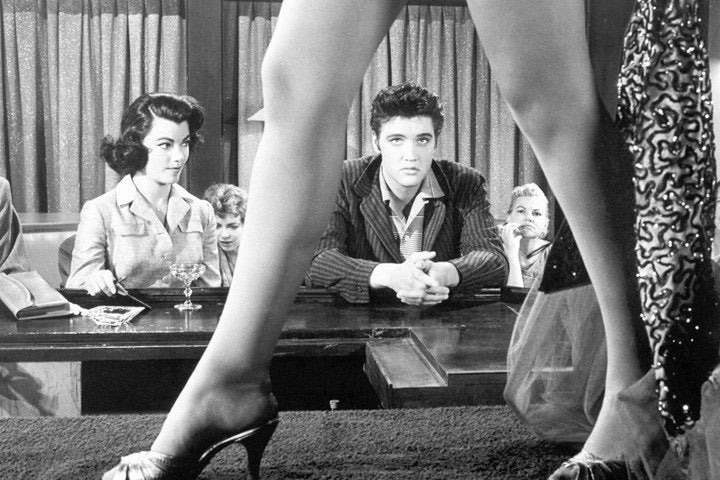
For Mulvey, Hollywood films are built inside what she calls a patriarchal system. So it makes sense that the way films are shot and edited ends up reflecting patriarchal values too. In that system, men look and women are looked at. Men act and women appear. It sounds blunt, but she proves it by breaking down how the camera works, how characters are framed, and how the audience is positioned.
One of her biggest ideas is the Male Gaze. Mulvey describes three different “looks” happening in a movie: the way the camera looks at the actors, the way the audience looks at the screen, and the way characters look at each other. In Hollywood cinema, all three line up with a heterosexual masculine perspective. The camera lingers on women in a sexualized way. The male characters are allowed to investigate, follow, choose, and control what happens. And the audience ends up taking on that same position because that’s how the film is built. Even if you’re a woman watching the movie, the film still pushes you to see the story through the male protagonist.
Mulvey spends a lot of time explaining how women in classical Hollywood films aren’t usually the ones who push the plot forward. Instead, they become visual spectacle. Their appearance creates interruptions in the narrative, moments where the story sort of pauses so the audience can look at them. This is what she means when she says women are “to-be-looked-at.” Meanwhile, men are the ones who carry the story, solve problems, make choices, and move through the world with purpose.
She also talks about how the presence of a woman on screen creates a kind of anxiety in the male viewer (based on Freudian theory), and Hollywood deals with that anxiety in two ways: voyeurism and fetishistic scopophilia. In voyeuristic scenarios, the woman becomes something to investigate, punish, or control. That’s common in thrillers, film noirs, detective plots, or anything with a “mysterious woman” angle. In fetishistic scenarios, the film turns the woman into this perfect, glamorous, untouchable image so the viewer can just admire her without feeling threatened. Think of musicals or scenes where the entire purpose is to showcase how beautiful she looks. Both strategies keep the viewer in a comfortable, controlling position.
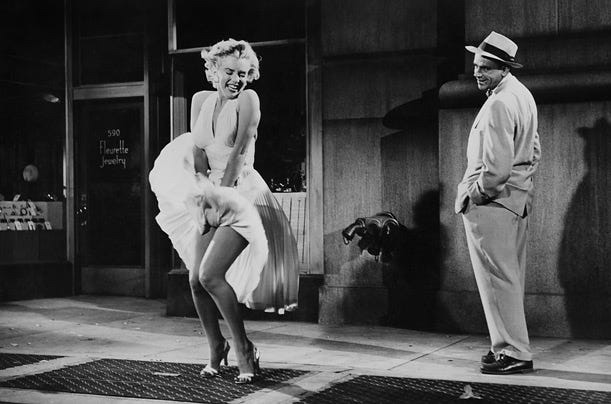
Mulvey ends these pages by saying that if we want to escape this cycle, we need to break away from the traditional Hollywood system entirely. The usual structure (linear stories, clear heroes, predictable shot patterns) automatically creates the male gaze. So she argues for a new kind of cinema, something more experimental, where pleasure itself isn’t tied to objectifying women or making the viewer align with a male hero.
Reading Mulvey now, it’s disappointing how much of what she pointed out in the 70s still applies to films today. Even when movies try to be progressive, the way they’re shot or edited can still fall back into the same patriarchal patterns. Mulvey’s whole point is that this isn’t an accident; it’s built into the foundations of Hollywood filmmaking. That’s why her essay still matters. It makes you more aware of what you’re actually watching, even in movies you love.
Reference:
– Mulvey, L. (1975) Visual Pleasure and Narrative Cinema. In: Film Theory and Criticism, pp. 802–816.


Recent Comments