
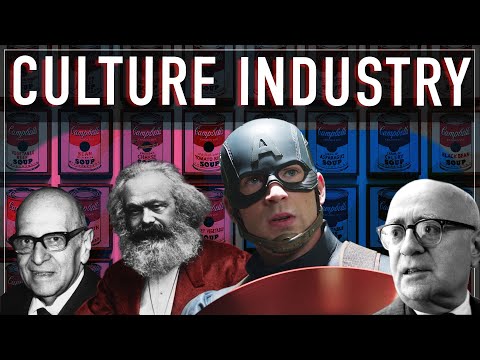
I’ll begin with the archetypal idea of the so-called culture industry, created by Theodor Adorno and Max Horkheimer: culture is industrialised, mass-produced, standardised, and the autonomy of art is lost. The cultural product is treated by capitalist production as a commodity for sale. Lash and Lury claim that there is more than just an overload of media in our globalised world, and it is a global culture industry. In this instance, culture is no longer perceived as merely the superstructure of society; it is gradually being incorporated into infrastructure, everyday objects, and items, as well as brands and flows of information. They refer to this change as the representation of things. In other words: not that culture gets industrialised, but that the objects of culture become so differently, and that objects (things) get mediated. Things become media, and culture becomes things. Like an example, watches, shoes, sports brands, popular movies, they are circulating through the world, they acquire a symbolic meaning, they are designed, branded, consumed, and they create difference (not sameness).
Lash and Lury argue that the interaction of cultural objects is altered in several significant ways, including the shift from commodity logic to brand logic. In earlier theories, cultural goods were conceptualised through commodity (exchange value, standardisation). The focus in the global culture industry is on brands, which encompass design-intensive goods, differentiation, distinction, and international flows. What is suitable for identities will become different: Even though the culture industry has reproduced identities and standardisations, global cultural objects accentuate difference, variation, and transformation when filtered through alternative environments. The previous culture was characterised by representations, symbolism, and meaning-making in a superstructural manner. At this stage, the writers argue that culture is implicit in material objects, and that these objects themselves become vectors of flows and mediation. National/regional to global flows: This movement of cultural objects is no longer limited to local or national levels; the worldwide scale and transnational movement now play a primary role. The authors follow the circulation of biographies of objects, such as films, brands, and events.
What Lash and Lury offer is a rethinking of the degree to which culture is completely assimilated into the everyday commodity, brand, and object life of late capitalism. It means: Consumption is not merely a matter of the utilisation of products but is the matter of experience of sensations, of emotions, of identities of trademarks. Life cycles and transformations and international paths are not only matters of standardisation but of circulation, of alteration, of difference – and hence the possibilities of agency, of variation are more open (but not necessarily emancipatory). The boundary line between what is regarded as culture and what is regarded as economy, or what is viewed as art and what is considered a commodity, is much more permeable. Culture has both economic and non-economic objectives.
The Global Culture Industry, by Lash and Lury, is an evolving redefinition of the modalities by which culture operates in our modern moment, as culture is both an industry and a global object, encompassing brand life and mediated matter. It is a challenge to be inquisitive about what is out there and about the texts, meanings, objects, flows, brands, and intensities, and to ask how culture, globalisation, capitalism, and everyday life have become intermixed.
Reference List
Lash, S. and Lury, C. (2007) Global culture industry: The mediation of things. Cambridge: Polity Press.
Hesmondhalgh, D. (2019). The cultural industries. 4th ed. London: SAGE Publications.
Adorno, T.W. and Horkheimer, M. (2002) Dialectic of Enlightenment: Philosophical fragments. Translated by E. Jephcott. Stanford, CA: Stanford University Press. (Originally published 1944).


You clearly explain the move from commodity logic to brand logic and show how cultural objects now work as mediated things in global flows. To make your piece even stronger, you could highlight the difference between standardisation in the Frankfurt School model and the focus on difference in Lash and Lury’s framework. Adding a short example of a current brand or object could also help show this change. Overall, your analysis is clear, well-grounded in theory, and shows you understand the main issues.