


A Two-Step Flow Theory Perspective
Imagine a group chat trying to decide where to eat. Within minutes, dozens of suggestions appear, yet the final choice often comes from a single person. This individual may have seen a viral TikTok, read online reviews, or followed recommendations from food creators.
Although everyone has access to the same information online, many people do not independently research restaurants before choosing where to go. instead, they rely on a trusted friends who has already checked reviews, watched tiktok Recommendations , or explored food content online. This everyday situation can be explained through two-step flow theory, developed by Paul Lazarsfield and Eilhu Katz which suggests that Media messaged often reach people indirectly through opinions leaders rather than directly from the media itself
Two-Step Flow Theory :
Two- Step flow Theory challenged the idea that media has a direct effect on audiences. Instead Lazrarsfield and Katz argues that information flows in two Stages
First, media messages reach opinion leaders who actively engage with and interpret information. These opinion (The Friend who researches the restaurant option first ) leaders then pass their views and recommendations on to others. ( The Rest of the Friendship group)
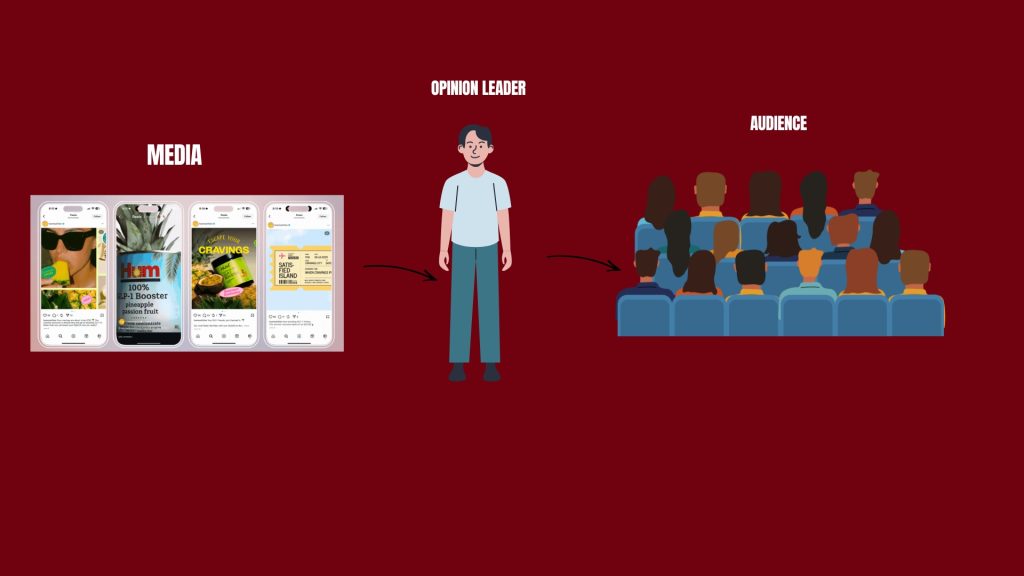

A modern example of Two-Step Flow Theory can be seen when a group of friends decides where to eat. Although everyone has access to restaurant reviews, TikTok recommendations and Instagram food content, one person often takes responsibility for researching the available options. After gathering information from various media sources, that individual recommends a restaurant to the group. In this situation, the friend acts as an opinion leader, influencing the final decision through information obtained from media platforms.
While Two-Step Flow Theory was developed in the 1940s, it remains relevant today. Social media platforms have expanded the influence of opinion leaders, allowing ordinary individuals to shape opinions and decisions within their friendship groups. Unlike the original theory, however, audiences can now interact with content, share their own recommendations and become opinion leaders themselves through digital platforms.
This example demonstrates that media influence is not always direct. Even in everyday situations, such as choosing a restaurant, opinion leaders continue to play an important role in shaping decisions. Although communication technologies have evolved, the fundamental process proposed by Two-Step Flow Theory remains highly relevant in contemporary society.
References :
Lazarsfeld, P.F. and Katz, E. (1955) Personal Influence: The Part Played by People in the Flow of Mass Communications. Glencoe, IL: Free Press.


