
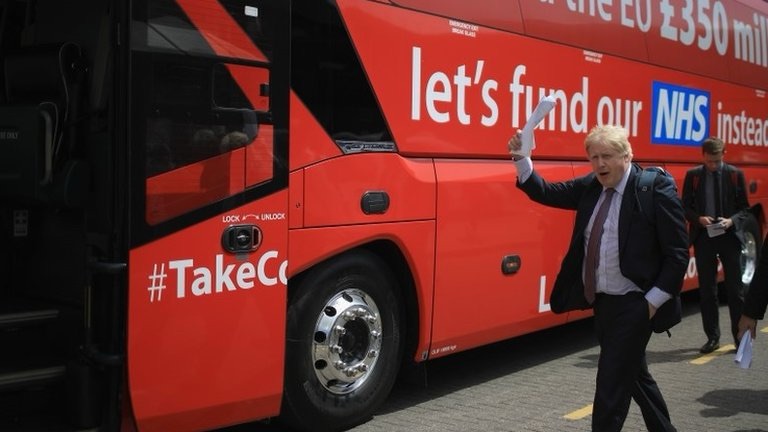
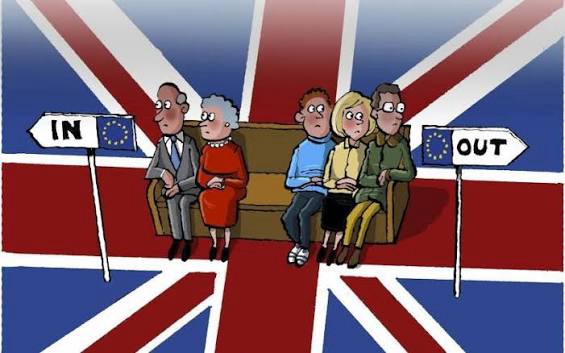
On 23rd June 2016, a referendum was held in the UK, giving the public the decision whether they wanted to leave or remain in the European Union. There were two sides to the campaign, vote leave and remain. The vote leave campaign encouraged members of the public to vote to leave the EU, arguing that Britain should have more control over its laws, borders and money. Out of 33.6 million votes, 51.9% of the public voted to leave. However,Britain did not officially leave until 31st January 2020.
Manufacturing consent is the idea that powerful institutions such as the government can influence what the public thinks about issues in society, by controlling and shaping the information they receive.
An example of this through the vote leave campaign with brexit was the ‘£350 million NHS bus’. This was a bright red bus that toured across the UK in the lead up to 23rd June. The slogan on the bus was used to promote the idea that by voting to leave the European Union, the £350 million that they claimed would be sent to the EU each week, would be able to be funded into the NHS instead.
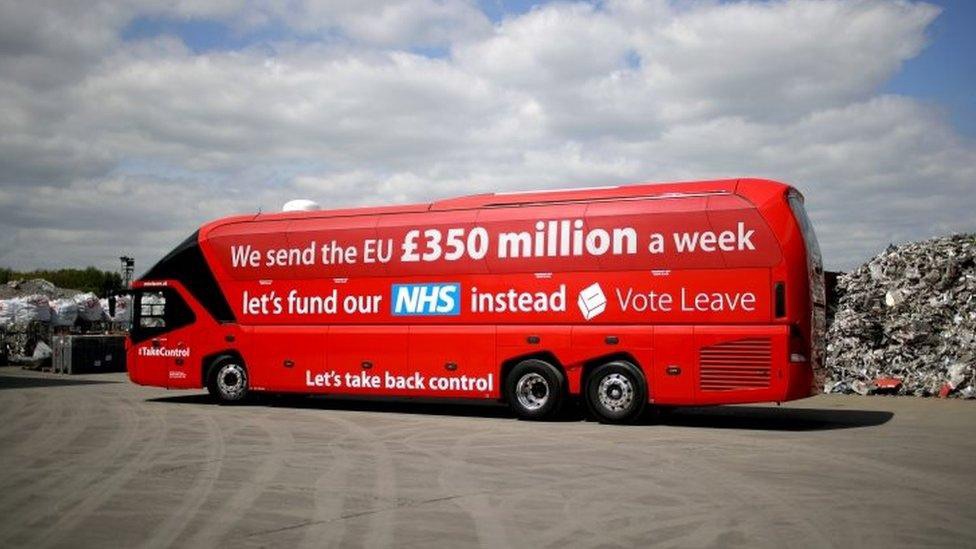
The NHS is a valued institution within Britain, due to the benefit of free healthcare. The NHS in recent times has been at the forefront of criticism, due to them being underfunded, and having long wait times for patients. The use of emotional manipulation through the slogan, ‘let’s fund out NHS instead’, will make them believe that by choosing to leave the EU, the benefit to the NHS will be great, due to spare funding being promised. The use of the statistics can also give the message an appearance of credibility. As Herman and Chomsky (1988) state, ‘the mass media serve as a system for communicating messages and symbols to the general populace’. (Manufacturing consent: the political economy of the mass media, 1988). By them choosing to use the bus as a form of political propaganda, to vote leave, it is communicating one message to the general public what the one benefit of their vote to leave could be.
Another concept that can be linked to this example is the critical political economy. The critical political economy is a theory that looks at how money, power, ownership and politics influence the media, and the information we consume. “Critical political economy of media examines how the political and economic organisation of media industries affects the production and circulation of meaning” (Hardy, 2014) The statistic of £350 million being available to the NHS if Britain left the EU, wasn’t a made up figure, however it is not entirely accurate. It was a real gross figure presented without essential context for the public, therefore being overall misleading. But by this being the main focus, has an influence on what we choose to consume and see, and may just choose to allow that factor to be the only thing to consider to help influence your vote, without doing any further research.
This example of the Brexit bus signifies how powerful political messages can influence public opinion through the media. Perhaps the biggest question could be: How much of what we believe politically is based on facts, and how much is influenced by the messages we are exposed to?
References
Herman,E.S, Chomsky,N. (1988) Manufacturing consent: the political economy of the mass media. New York: Pantheon book
Hardy, J. (2014) Critical political economy of the media: an introduction. Routledge, Taylor & Francis group.


Recent Comments