
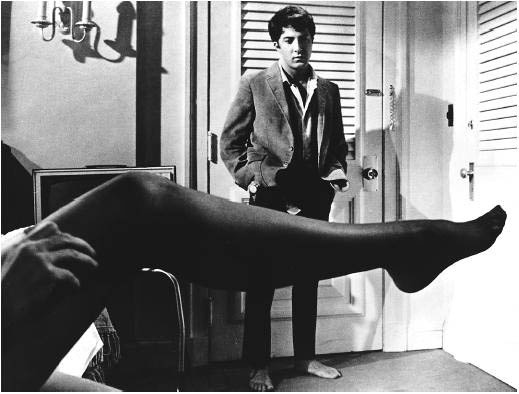
The way women are represented in cinema has changed significantly over the years, but there’s one concept that continues to influence how audiences understand female characters: the male gaze. It was first introduced by the feminist film theorist Laura Mulvey in her really interesting essay Visual Pleasure and Narrative Cinema in 1975, she said that the male gaze shows how women are frequently presented in films from a heterosexual male perspective, putting men in an active view position and women as objects of visual pleasure.
Maulvey said that traditional cinema encourages audiences to identify with male characters, who are normally associated with power and control. On the other hand, female characters are often presented through their physical appearance and sexuality, this creates an imbalance in which women become objects that are pleasing to look at rather than individuals who control their own representation and can be just as independent. Mulvey stated that the camera angle, the male characters and the audience can all contribute to this way of looking at women.
A very interesting period to explore this theory is the Film Noir era, especially during the 1940s and 1950s, this era became known for its dark atmosphere, dramatic lighting, crime narratives and complex female characters. One of its most recognisable figures was the femme fatale: an attractive, mysterious and manipulative woman who uses her sexuality to influence and seduce men. According to Place (1998), this character challenges traditional representations of femininity while also reflecting male anxieties about female independence.
The film Double Indemnity (1944), directed by Billy Wilder, shows a good example of this representation. The main female character, Phyllis Dietrichson, played by Barbara Stanwyck, is portrayed as a seductive, intelligent and dangerous woman, although she appears to have control over the men around her, her influence is very connected to her sexuality and physical appearance, this creates an interesting contradiction: women are represented as powerful and independent, but their power is still shown through male desire and fear.
From Mulvey’s perspective, Film Noir reflects the male gaze because the camera frequently highlights female beauty through close-ups and revealing outfits. Women become central to the visual experience, while male characters generally drive the narrative forward, the audience is also encouraged to view female characters through the perspective of male protagonists.
However, Film Noir shows a more complicated representation of women. Unlike traditionally passive female characters that we see in most movies, femme fatales can be ambitious, intelligent and capable of making their own decisions. Nevertheless, their independence often comes with negative consequences within the narrative. Krutnik (1991) explores how Film Noir reflects ideas about masculinity, identity and power, making the relationship between male and female characters particularly important when analysing the genre.
Ultimately, Laura Mulvey’s theory helps us understand that the male gaze is not simply a historical feature of classic Hollywood cinema. It’s still relevant in contemporary films, advertising and social media, where women’s appearances are frequently prioritised and overlooked over their personalities and abilities. Looking back at the Film Noir Era, it allows us to understand how gender representations developed and why questioning the way women are portrayed in visual media remains important today.
References
Krutnik, F. (1991) In a Lonely Street: Film Noir, Genre, Masculinity.
Mulvey, L. (1975) ‘Visual Pleasure and Narrative Cinema’.
Place, J. (1998) ‘Women in Film Noir’, in Kaplan, E.A. (ed.) Women in Film Noir. 2nd edn. London: British Film Institute.
Wilder, B. (dir.) (1944) Double Indemnity [Film]. Paramount Pictures.


