
Horkheimer and Adorno argue that the culture industry does not simply meet audience needs; it shapes what audiences want. This weakens people’s ability to think independently and encourages them to accept the existing social order. The commercialisation of art illustrates this theory.
In “The Culture Industry: Enlightenment as Mass Deception”, Horkheimer and Adorno argue that the use value of art is being replaced by its exchange value: “enjoyment is giving way to being there and being in the know” (Horkheimer and Adorno, 2006, p. 65). In other words, the value of art is shifting from the experience of appreciating an artwork to what it can be exchanged for, such as prestige and social recognition. When people come to value art for the recognition it brings, their desires are steered towards what the industry supplies.
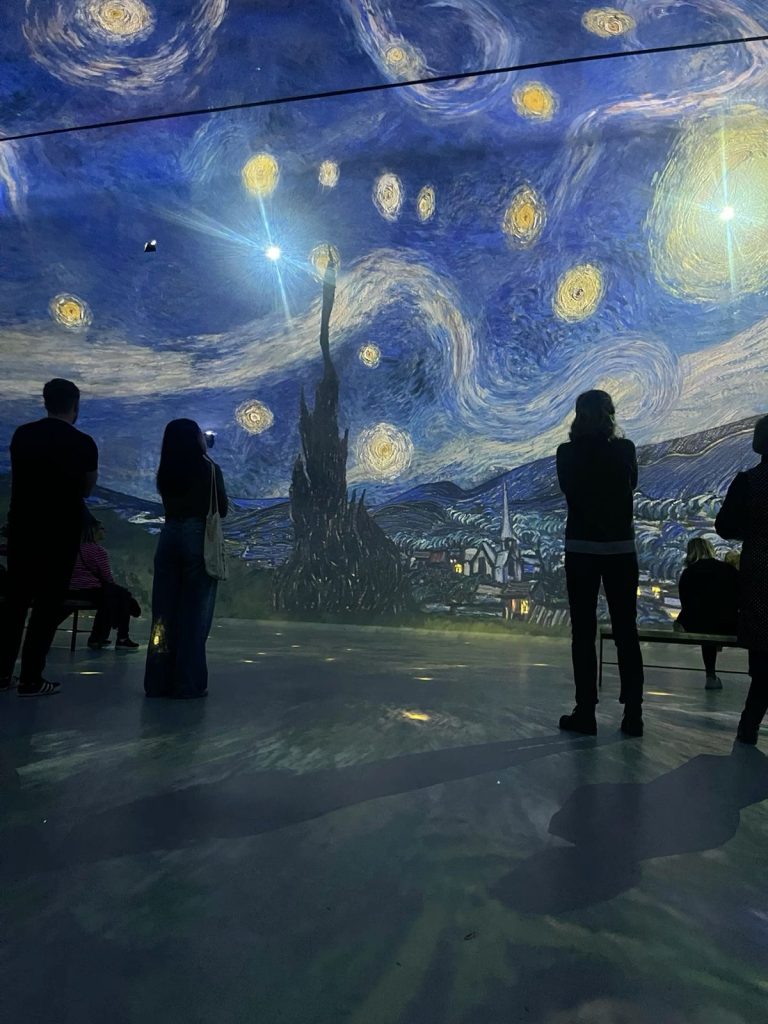
Many exhibitions are now designed for taking pictures, using interactive installations and check-in spots to encourage visitors to take pictures. Exhibitions built this way suggest that cultural production is shaped by what can be rewarded socially. It is common to see visitors taking quick photos in front of famous artworks, sometimes after long queues, and social media posts often show people dressed up and posing with art. I saw at an exhibition: a visitor was reading an artwork’s introduction when the person photographing the artwork told them to move away so they would not block the shot. In that moment, getting the photograph took priority over understanding the work, which broadly corresponds to the shift from use value to exchange value. This is consistent with the authors’ theory, although a single observation cannot prove it.
Nevertheless, the theory has limitations. Horkheimer and Adorno wrote about radio and film, one-way media in which audiences could only receive. Social media changes this: people can comment and share opinions, which creates opportunities for discussion and lets people who cannot visit galleries see artworks. Furthermore, the authors argue that social valuation becomes consumers’ “only use value” (Horkheimer and Adorno, 2006, p.66 ), but visitors can enjoy an artwork and want to share it at the same time. The authors might reply that such enjoyment is itself shaped by social valuation, but this makes the claim difficult to test, since any response can be read as confirming it.
Art can carry social and commercial value without necessarily losing its artistic value. The theory helps us recognise the influence of commercial logic on cultural consumption, but we should also consider the other values of art as communication technology develops.
Reference:
Horkheimer, M. and Adorno, T.W. (2006) ‘The culture industry: Enlightenment as mass deception’, in Durham, M.G. and Kellner, D.M. (eds.) Media and Cultural Studies: Keyworks. Rev. edn. Oxford: Blackwell, pp. 41-72


Really enjoyed this piece! The example about the visitor being asked to move out of the camera shot made the transition from “use value” to “exchange value” super clear and relatable.
You raised a solid point about social media allowing two-way interaction, unlike old-school radio or film. I wonder, though even when people actively comment and share online, do you think platform algorithms push us back into passive consumption anyway?
Also, just a quick formatting note: your in-text citations say 2002, but the reference list at the end shows 2006. Really thoughtful argument overall!
Thank you for pointing that out! I’ve corrected the citation so the in-text year and the reference list now match.
I agree that algorithms have a big influence on the content people see online, so the two-way interaction I described is probably more limited than it appears. However, people can still comment, disagree and reinterpret what they are shown, so I think consumption is constrained rather than entirely passive. Thanks for sharing your thoughts, it’s given me something more to think about!
I really like how you connected Horkheimer and Adorno’s theory to a real-life situation, as it makes the concept of use value and exchange value easier to understand, the example of someone asking another visitor to move so they could take a picture is particularly interesting because it shows how social recognition can sometimes become more important than the artwork itself. I also agree with your point about social media having both positive and negative effects, as it can encourage people to focus on appearances while also making art more accessible to a wider audience, I think this balance is what makes the relationship between art, social media and the culture industry so interesting.
Thank you for your kind comment! I’m glad the exhibition example helped make the concepts clearer, and I agree that this balance is what makes the topic so interesting.