

Two-Step Flow Theory means that information first flows to influencers and then spread to their social media networks or followers.
I created an illustration, as shown below:
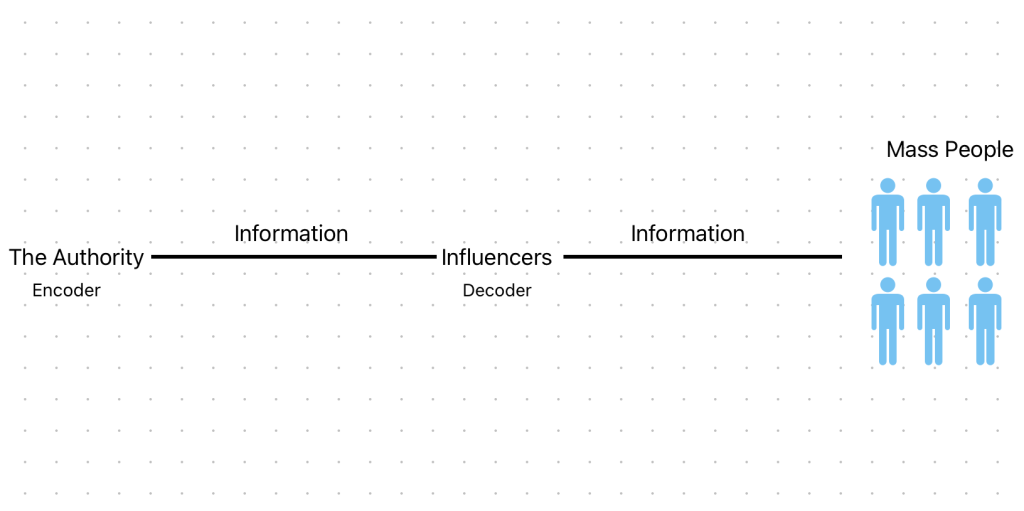
Along with the advent of influencers, people increasingly gain newsletters from opinion leader, which means that people prefer second-hand sources as their prime source. Then, scholars such as Lazarsfeld, Berelson, and Gaudet built the “Two-Step Flow Theory” on the base of this phenomenon. Nowadays, the theory remains highly relevant. The audience receives information from multiple channels and influencers on their mobile phones. The Two-Step Flow Theory has transformed into multiple-step communication.
This theory brings several benefits. First, it allows people to use intermediaries to filter and interpret information to understand complex information. The audience are able to be motivated. Second, this theory points out that people prefer accessible and simple content. It also can explain why the audience need influencers. Because the audience are able to lower their reading cost and conserve energy, so that they save time and attention for thing that are more essential.
For me, I always search for bloggers , actively visiting their profiles to obtain the information when I want to receive more information. For example, when I want to catch some game news, such as updates and adjustments, I always go directly to the profiles and comment sections of the bloggers I follow, rather than consulting official sources. As a result, I have much more time to focus on practical skills learning and self improvement.
There is an influencer who is Dylan Page, and is also an example in TikTok. He does not generate original news but takes news from legacy media and presents them in a casual, conversational way. Legacy media reports news, then Dylan Page summarises and posts it on TikTok with plain language. His followers form their opinions through him, not the original report.
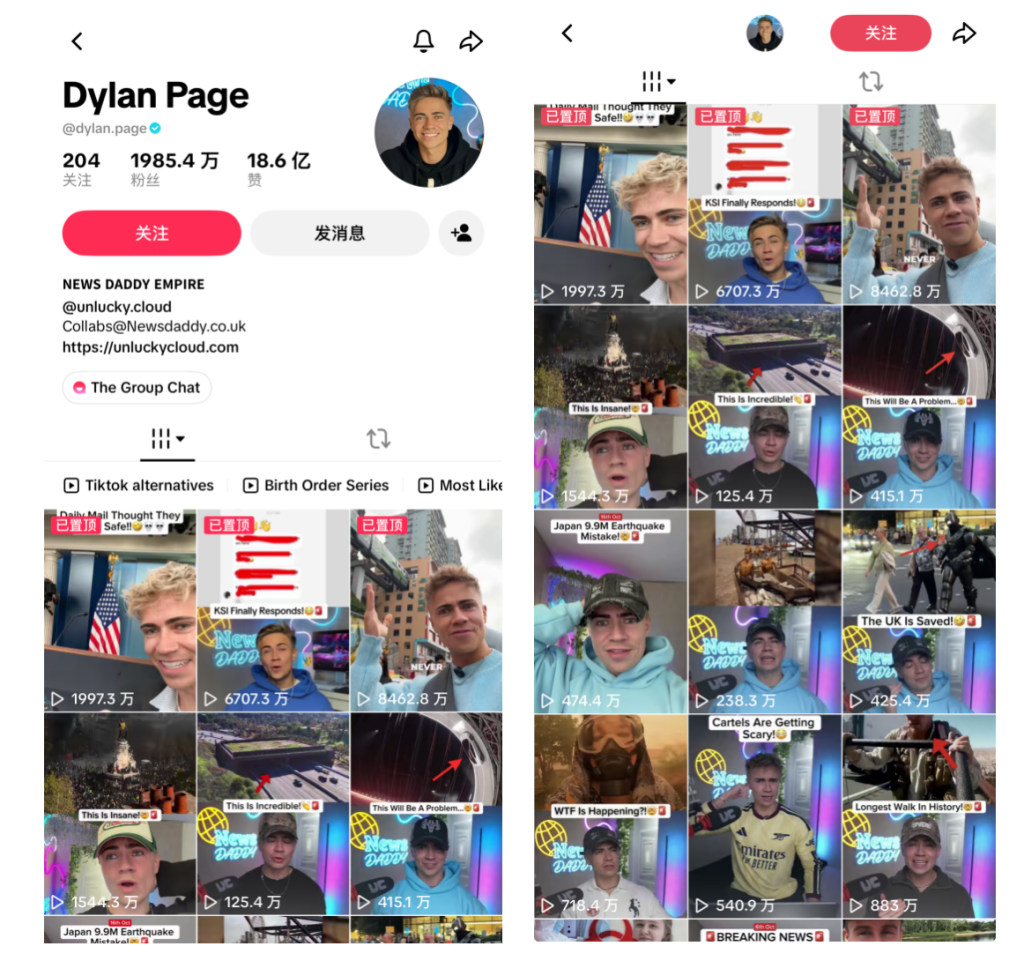
Most people direct their attention toward topics that they are interested in, rather than consuming everything passively. He covers international news and social news which people seldom focus on, regularly using plain language to explain it, delivering it as a brief presentation. Because of things what he has done, viewers are able to easily grasp major international and social developments through his videos without the high reading cost by reading lengthy articles or watching full news reports.
However, ideas that media’s influence on people’s behaviour is usually limited by opinion leaders who initially consume media content on topics of particular interest to them, interpreted it in light of their own values and beliefs, and then passes it on to opinion followers. Therefore, the source of effects is interpersonal rather than mass communication. Secondary sources are not entirely objective. Content generated by Dylans Page inevitably includes his own opinions which may shape followers’ attitudes.
Reference:
Baran, S. J. (2008). What is mass communication? In S. J. Baron, Introduction to mass communication: Media Literacy and Culture (8th ed., pp. 4-6).


