
1. Meaning Is Not Transmitted Intact
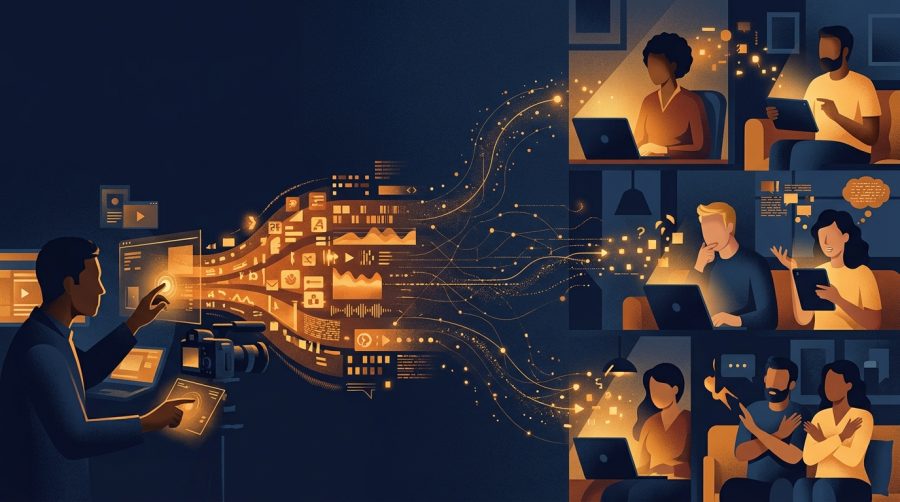
In a traditional, linear model of communication, a sender produces a message and an audience receives it, as if meaning traveled transparently along a channel. In “Encoding/Decoding,” Hall challenges this “sender–receiver” model. The meaning of a media text is not simply transferred, unchanged, from the producer’s mind to the audience. Rather, it takes shape through the processes of production, textual representation, and interpretation.
Encoding refers to the way producers organize meaning within a media text under particular institutional, technological, and cultural conditions. Decoding refers to the way audiences interpret that text through their own knowledge, experience, and social positions. The two processes are related, but they do not necessarily coincide. Communicators may construct a preferred meaning, but they cannot ensure that every audience will interpret the text in the same way.
Hall further identifies three hypothetical positions of decoding. A dominant-hegemonic reading accepts the framework favored by the text. A negotiated reading broadly accepts that framework but modifies it in light of the reader’s own circumstances. An oppositional reading understands the text’s dominant meaning but rejects it in favor of a different framework. These are not fixed labels for audiences; they are tools for analyzing particular interpretive relationships. The same person may adopt different positions toward different issues or texts.
2. Bringing the Classic Model to Digital Platforms
In social media environments, encoders are not limited to traditional editors, journalists, or producers. Brand managers, platform creators, ordinary users, and even the systems and rules through which platforms organize content all participate in the production of meaning. Content formats, interface features, available hashtags, engagement metrics, and recommendation mechanisms can influence which forms of expression are easy to produce, likely to be seen, and able to circulate further. In this sense, encoding in digital media takes place not only through words and images, but also through publishing processes and platform conventions.
Decoding has also become more visible. Comments, reposts, remixes, imitations, and parodies mean that audience interpretation is no longer simply a private act of reading; it can become a new public text. As users interpret original content, they may also re-encode it and carry it into new chains of circulation. Communication thus takes the form of overlapping cycles rather than merely one-way transmission.
However, user participation does not mean that all users have equal power to circulate their content. Whether a post becomes visible is still shaped by platform rules, the allocation of resources, account influence, and mechanisms of visibility. When applying Hall’s theory to digital media, researchers should examine not only how texts organize meaning, but also the institutional and technological conditions under which those meanings are produced, circulated, and given attention.
3. An Example: Multiple Readings of the Same Short Video
Consider a short video that humorously depicts working overtime and presents it as a lighthearted part of everyday life. Following Hall’s approach, we might first examine how the producer encodes the video: How do the images, music, editing rhythm, and caption define “overtime”? Do they attribute it to individual choice, workplace culture, or the structure of the work system? We can then consider how audiences decode it. Some may accept its lighthearted framing and view the video as entertainment. Others may find it funny while relating it to their own working conditions. Still others may reject its understated tone and interpret the video as glossing over the pressures of labor.
If users later create a satirical version or add different experiences in the comments, these expressions constitute re-encoding. But whether such responses gain broad visibility cannot be inferred from decoding theory alone. We would also need to study how the platform ranks and recommends content, and how users understand and adapt to those rules. This example shows that Hall’s model is useful for raising questions about meaning and power, but it cannot replace empirical research into platform mechanisms and conditions of communication.
4. The Theory’s Explanatory Power and Limits
Hall’s theory makes an important contribution by treating audiences as active interpreters rather than passive recipients, while retaining an analysis of power relations in media production. It is particularly useful for examining why one interpretation becomes a text’s preferred meaning, how different groups accept, modify, or oppose that meaning, and how audience responses enter subsequent processes of circulation.
However, two simplifications should be avoided. First, the three decoding positions should not be treated as fixed categories of audience members that never change. Second, digital platforms should not be imagined as open spaces that have eliminated power in communication. Hall’s model primarily addresses media texts and their structures of meaning. Questions involving platform recommendations, data-driven governance, and cross-platform circulation require further engagement with the political economy of communication, platform studies, and specific audience research. In other words, the theory offers an analytical path, not a ready-made answer to every phenomenon in digital media.
Conclusion
Digital media have not made encoding and decoding less relevant. On the contrary, they make the relationship between the two easier to observe: meaning is continually negotiated through production, interpretation, reposting, and re-creation, while remaining constrained by platform conditions and social power. The value of Hall’s theory lies not in claiming that audiences must either comply or resist, but in prompting researchers to ask specific questions: Who constructs the preferred meaning? How do people interpret it, and with what resources? And how do those interpretations enter the next round of communication?
References
References
- Hall, S.(1980)。“编码/解码。”载于 S. Hall, D. Hobson, A. Lowe 和 P. Willis(编),《文化、媒介、语言》(第128–138页)。哈钦森。
- Morley, D.(1980)。《全国受众:结构与解码》。英国电影协会。
- Jenkins, H.(2006)。《融合文化:旧媒体与新媒体的碰撞》。纽约大学出版社。
- Gillespie, T.(2014)。“算法的相关性。”载于 T. Gillespie、P. J. Boczkowski 和 K. A. Foot(编),《媒体技术:关于传播、物质性与社会的论文集》(第167–194页)。麻省理工学院出版社。


