
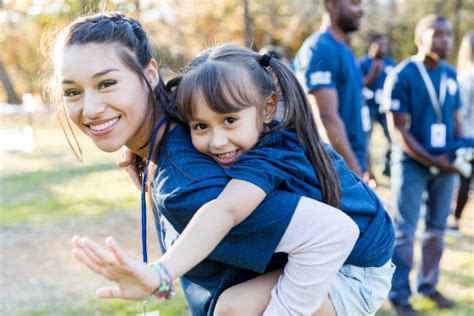
Volunteering work is often regarded as one of purest and most selfless forms of altruism: an act of kindness driven by compassion, generosity and the desire to make a positive change, but what happens when the very act intended to help those in perpetual need, ends up causing more harm than good? Particularly where the well-being of young children is concerned, we need to begin to question who truly benefits from volunteering or whether we’ve been conditioned to simply just accept these cheerful images presented to us and ignore what could be conspiring behind the scenes. My central issue here isn’t whether volunteers harbour good intentions but whether those intentions lead to beneficial outcomes for all parties involved.
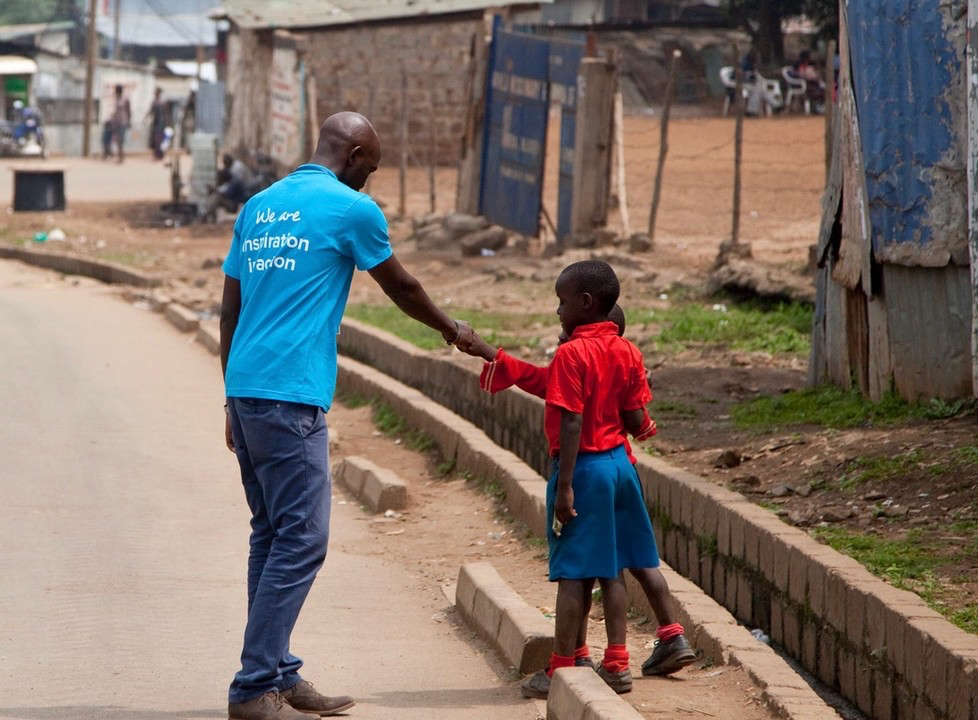
Kenyan UN volunteer fist-bumping a child in Kibera slums, in the community he’s assisting in a participatory slum upgrading project for UN-Habitat:
Herman and Chomsky’s theory of ‘manufacturing consent’ explores how media institutions can influence public opinion by shaping the information and perspectives audiences are exposed to. Through carefully constructed narratives, selective representations and the repetition of particular messages, certain ideologies can become widely accepted without necessarily being critically questioned. In the context of volunteering, this could explain why humanitarian work is so frequently associated with positive social change, whilst the potential consequences of certain volunteering practices receive considerably less attention.
A particularly concerning example of this can be seen in orphanage tourism, where volunteers travel overseas to support children living in residential care facilities. However, what is often overlooked is that many of these children are not necessarily orphans. According to the UNCIEF, the majority of children living in residential or institutional care worldwide have at least one living parent, close relative or guardian. In some cases, children are separated from their families’ external factors like poverty, discrimination or a lack of adequate support. More concerningly, some institutions have been found to encourage family separation and recruit children to attract fee-paying volunteers and donors. This raises serious worries about whether certain volunteering initiatives are genuinely prioritising children’s welfare or sustaining a system that benefits financially from their vulnerability.
A similar issue can be observed in volunteer construction projects, where the desire to provide participants with a rewarding experience can sometimes overshadow the actual priority-needs of the communities involved. In some cases, unskilled volunteers undertake construction work without the necessary expertise, leaving local professionals to correct or redo work that has been ‘completed’ incorrectly. Raising concerns about whether such initiatives are genuinely contributing or simply providing volunteers with a sense of achievement, (an ego-boost). As explored in the Guardian’s investigation into voluntoirism, (2018), international house-building projects can also be considerably more expensive than employing local workers, suggesting that the money spent on transporting volunteers could potentially have been put to better use by supporting and funding local expertise, in the first place.
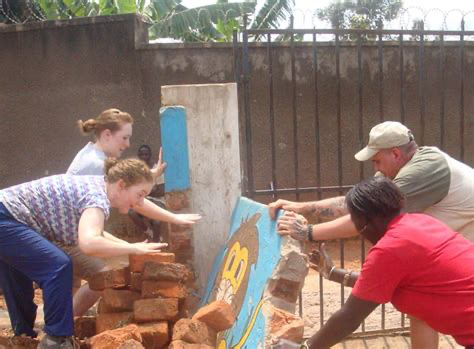
A volunteering program in Uganda for site improvement and maintenance:
An account shared by voluntourist, Pippa Biddle, who participated in a construction project in Tanzania, greatly illustrates this problem of valuing feelings over effectiveness. During the placement, volunteers attempted to construct a library but again, lacked the necessary building skills. Their work was so structurally unsound that local construction workers dismantled and rebuilt it overnight, allowing the volunteers to remain unaware of their mistakes. As reported by NPR (2018), the purpose of such initiatives has to be questioned, the project effectively prioritised providing foreign volunteers with a rewarding experience. This illustrates how the appearance of humanitarianism can overshadow its actual effectiveness, reinforcing a narrative which the volunteer’s contribution is celebrated while the knowledge and labour of local communities remain largely invisible.
Perhaps even more concerning are the safeguarding risks associated with these initiatives, particularly when vulnerable children are given access to unfamiliar adults or elders without adequate supervision or background checks. According to Lumos Foundation, some residential institutions allow volunteers to interact with children despite improper child protection procedures, creating opportunities for individuals with harmful, dangerous intentions to exploit their vulnerability. Furthermore, the repeated introduction and departure of short-term volunteers can have damaging emotional consequences. Children who have already experienced separation from their loved ones may form attachments to volunteers who provide them with ‘affection,’ attention and a sense of security, only to experience another separation once those individuals have to leave. This creates a recurring cycle of attachment and abandonment, potentially undermining children’s ability to develop secure relationships and dynamics, to trust others. Consequentially, what is marketed as an opportunity to provide love, and support can inadvertently expose children to extensive emotional and physical harm.
Ultimately, these examples highlight the importance of challenging the narratives surrounding humanitarian work and who they genuinely serve. Through the repeated circulation of images depicting smiling children and families, grateful communities and heroic volunteers, volunteering is often presented as an uncomplicated act of goodwill. However, such representations risk reinforcing a hierarchy in which Western volunteers are positioned as rescuers, whilst disadvantaged communities are portrayed as passive recipients of assistance. This closely reflects the worries raised by Herman and Chomsky’s theory of manufacturing consent, whereby dominant narratives can form public perceptions whilst alternative perspectives receive considerably less recognition. The experiences, expertise and actual needs of those receiving assistance should be given just as much consideration as the intentions of those providing it.


