

Katz and Lazarsfeld’s two-step flow theory argues media does not directly and unilaterally determine audience opinions. The channels through which influence spread are as follows: first, it is conveyed by mass media to opinion leaders, and then opinion leaders reinterpret and integrate the information. And then it is passed on to the general public through social connections (Katz & Lazarsfeld, 1955). The viral commercial success of Kylie Jenner’s Lip Kit offers a vivid contemporary illustration of this classic theory (Soffer, 2021).
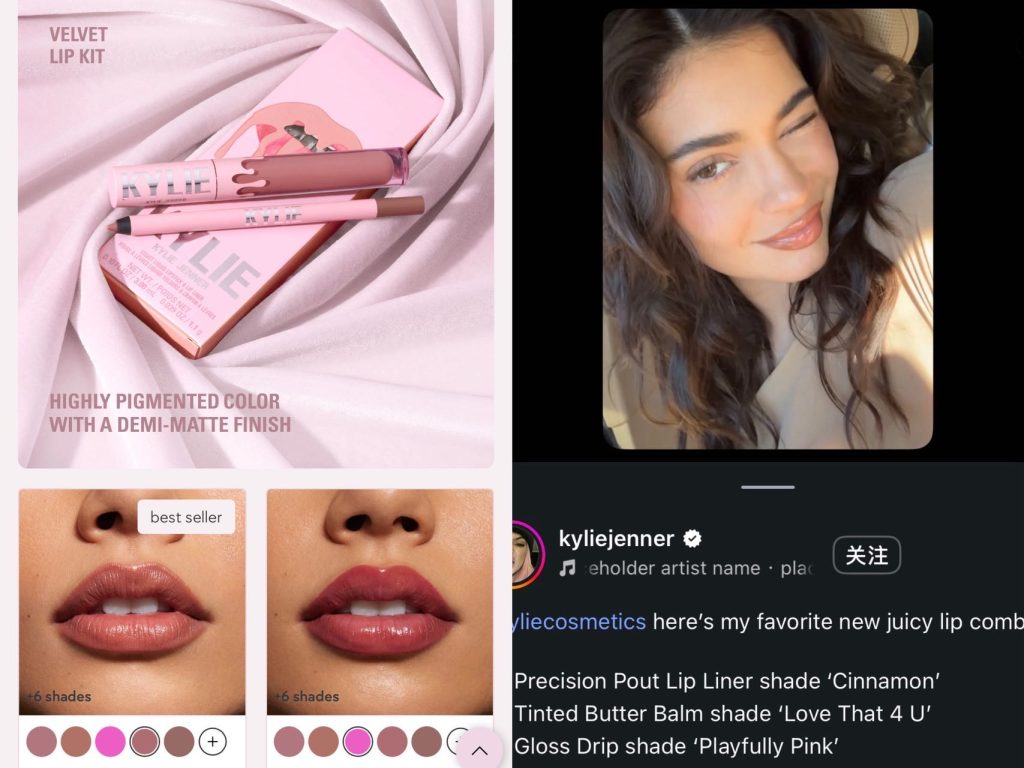
Mass-media content formed the first step. The reality TV shows, Instagram posts and entertainment news of the Kardashian family have drawn public attention and discussion to Jenner’s full lips. However, these public opinions did not directly translate into sales of lip products. Instead, Kylie Jenner operated as a celebrity opinion leader: She transformed the enthusiasm of the discussion and the public’s attention into a set of business plans. With the lip products she launched, people can achieve perfect lip lines without having to inject hyaluronic acid. Her personal background played the role of a credible interpersonal intermediary, functioning to screen and interpret the mainstream media narratives for the specific social group (Katz & Lazarsfeld, 1955).
During the second dissemination stage, the smaller online influencers on various platforms began to participate in activities such as swatch testing and product reviews, once again promoting the products to their followers. The majority of consumers purchased the products through recommendations from similar online influencers or idols, and the brands do not solely rely on official advertisements for sales.
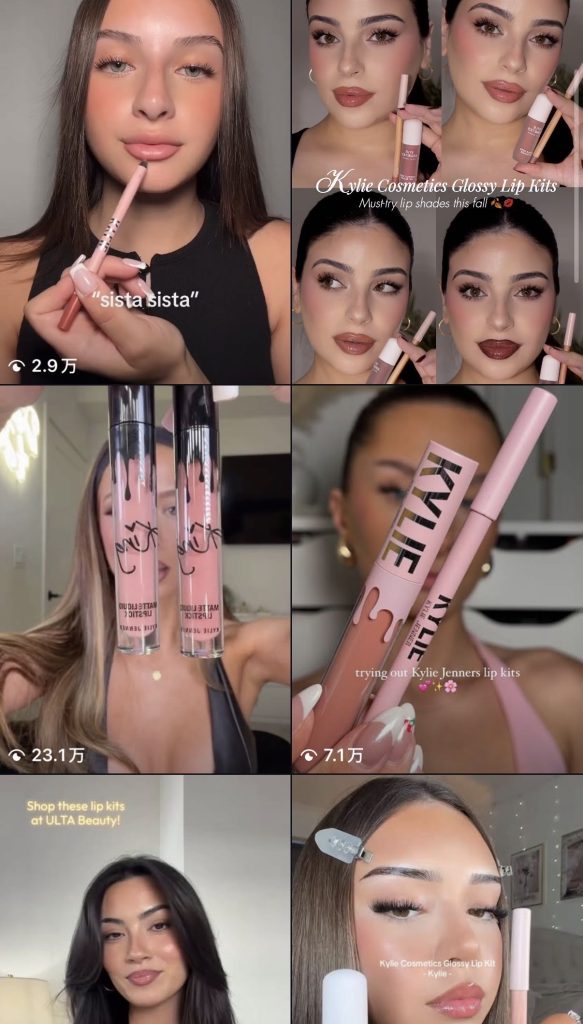
It is worth noting that the emergence of digital media has transformed the original communication framework. In the 1950s model, Opinion leaders are mostly played by authoritative family members, colleagues, friends from solid offline social groups (Soffer, 2021). By contrast, Jenner’s followers belong to liquid, algorithm-constructed digital groups. The platform’s algorithm will amplify popular posts and work with influencers to curate content. It will push lip gloss-related content to the groups that might be interested in the beauty trend. The influencers and the algorithm jointly determine how the content is disseminated, forming a hybrid “Two-Step Flow’ model.
However, this theory also has limitations. The theoretical model cannot explain the “one-step flow” where users directly click on advertisement and place an order. Moreover, opinion leaders will use the trust that the audience has in them to conceal their commercial motives. For instance, the followers trust Kylie’s authenticity, but rarely realizes that she is actually promoting her profitable products.
References
Katz, E. & Lazarsfeld, P.F. (1955). Personal influence. New York: Free Press.
Soffer, O. (2021). Algorithmic Personalization and the Two-step Flow of Communication. Communication Theory, 31(3), pp.297-315.


