
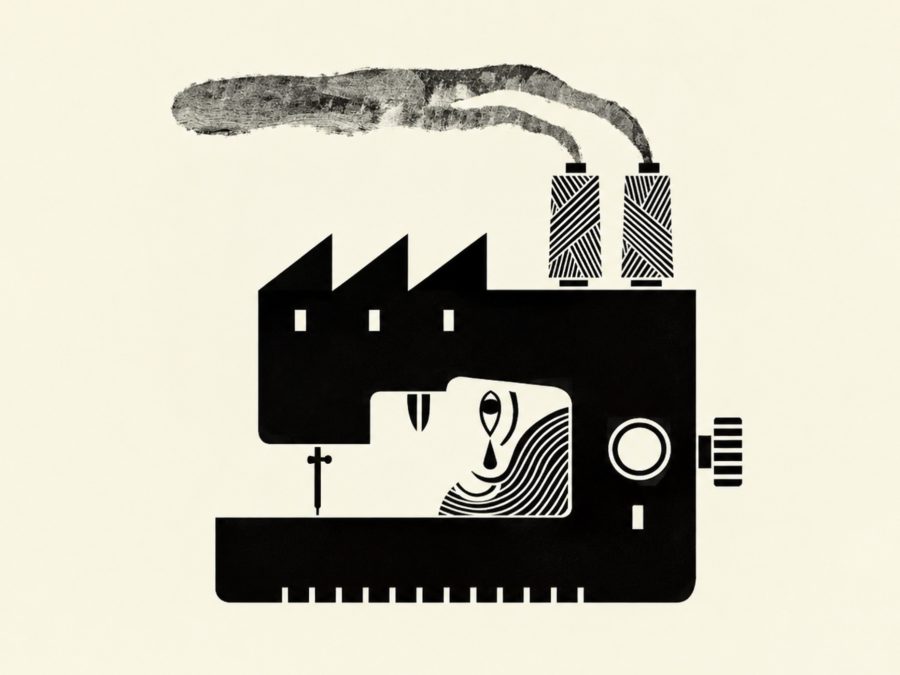
Do you also start to watch short videos to relax after a day of hard study and work? We subjectively think that the voluntary choice of entertainment for rest may be the embodiment of the culture industry’s control with the help of entertainment.
Horkheimer and Adorno (2002,p.51) pointed out that entertainment is an extension of labor under late capitalism. People seek entertainment in order to escape from the mechanized labor process so that they can devote themselves to labor again. But at the same time, mechanization deeply dominates leisure and the pleasure brought by leisure, and is eager to extract the maximum effect in each individual scene.
The culture industry remains the entertainment business. Its control of consumers is mediated by entertainment (Horkheimer and Adorno, 2002, p.52). The culture industry is not directly forced to realize, but uses entertainment to automatically filter out profound and reflective ideas. It domination can be seen in capturing your interest in well-designed, decompressed and appealing entertainment products. However, this form of domination does not come from any form of forced external force, but the principle of entertainment itself. When we are at the office, we are provided with a series of standardized processes by our company. When we want to escape from the standardized process at work, the entertainment we choose voluntarily may also carry standardized features. Specifically, this includes similar opening, fixed video template and repetitive plots. The content of these videos are highly accessible and require little mental effort. When we repeatedly rely on short videos to relieve fatigue, we will gradually form the automated behaviour of “scrolling short videos when tired”. In this way, the standardized features of entertainment not only shape the content we receive, but also may affect the way we organize our leisure time. More importantly, although short videos can temporarily relieve fatigue, they may not help us understand why we are tired. When entertainment primarily becomes a way to divert attention and obtain instant gratification, we may remain confined to regulating personal emotions and reflect less on the links between our individual hardships and the socio-economic structure.
The power of the culture industry lies in its integration with the fabricated needs, rather than simply in the opposition to those needs (Horkheimer and Adorno, 2002, p.52). The culture industry does not suppress these needs of people, but people themselves have emotional needs, and the culture industry further shapes and processes these needs. It is not that industry forcibly suppresses people’s desires, nor that the masses have completely lost their autonomy, but that people’s leisure needs have been integrated with the supply of products from culture industry.
But this does not mean that we should completely reject entertainment, nor does it mean that all our choices are subject to the culture industry. We can obtain emotional comfort brought by entertainment such as short videos, maintain independent thinking after enjoying entertainment, which is the way to maintain our own autonomy within this system.
Reference:
Horkheimer, M. and Adorno, T.W. (2006) ‘The Culture Industry: Enlightenment as Mass Deception’, in Durham, M.G. and Kellner, D.M. (eds.) Media and cultural studies: keyworks. Rev. ed. Oxford: Wiley-Blackwell, pp. 41-72


