
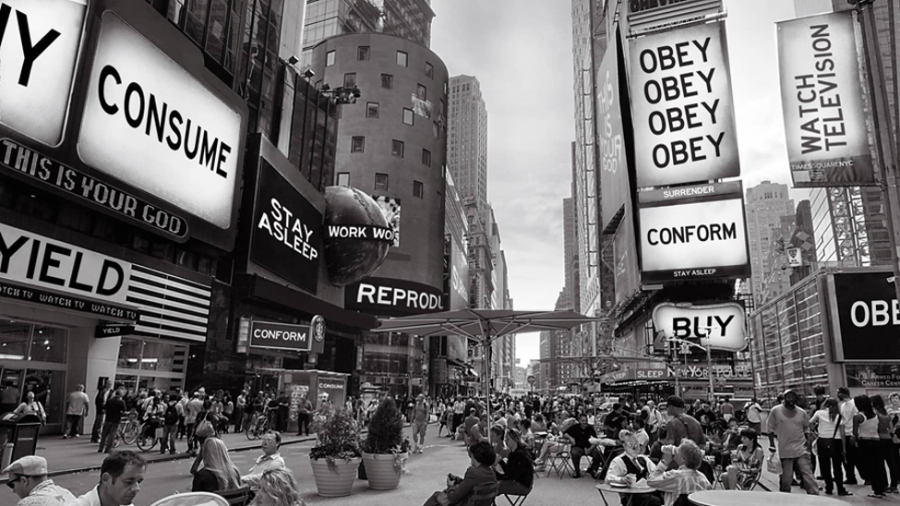
In current society, media impacts our thoughts, and conducts our world. Familiar culture is a routine part of our life from TikTok to Instagram and to movies or TV. But how much of what we eat is “authentic”? Theodor Adorno and Max Horkheimer’s thought on the Culture Industry is an examination of the way entertainment is manufactured for profit, and how mass media can foster conformity and consumerism.
What’s the Culture Industry?
according to Adorno and Horkheimer (2002), culture has now gone industrial and our films, music and other entertainments are made to look like commercial goods. Cultural products may be built around scripts or formulas that are commonly used and make sure to draw in big crowds and produce money.
For instance, numerous Hollywood movies repeat the same narrative and concepts. Such movies are popular with viewers, but their predictable plots reinforce the notion that popular entertainment is not necessarily particularly original in creative terms.
For instance, numerous Hollywood movies repeat the same narrative and concepts. Such movies are popular with viewers, but their predictable plots reinforce the notion that popular entertainment is not necessarily particularly original in creative terms.
Hesmondhalgh (2019) has defined cultural industries as industries in which commercial pressure shapes creative production in economic systems. However, the concept of influencers is not exclusive to the world of fashion, as they often endorse products via sponsored posts that can be mistaken for regular content.
This relates to the work of Adorno and Horkheimer where he states that popular culture promotes consumerism. If they see the same styles or look in their favourite consumer products over and over, they might be subjected to a buying pressure to fit the trend. But the audience is not completely passive, it can develop its own content and can question trends as well as offer alternative points of view.
What is Individuality in Popular Culture?
Individuality is also raised by the Culture Industry. The frequent repetition of similar images and messages will help to normalize, or mainstream, values and behaviour. For instance, trends on social media might make people have unrealistic notions about beauty. But popular culture can, of course, present possibilities for creativity and resistance as well. Participatory culture enables viewers to be both creators and consumers of media content and to directly interact with it, as Jenkins (2006) notes. This is an indication that, while media can shape culture, culture can also shape media.
Conclusion
Understanding how media, capitalism and society are connected can be helped with the Culture Industry. Adorno and Horkheimer point out how media can seek profit, thus promoting consumerism and conformity. These concepts are still applicable today in our social media-driven world of influencer marketing and algorithms. But the audience can also challenge media messages and develop alternate means of expression. The Culture Industry makes us question our consumption and our daily lives.
References:
Adorno, T.W. and Horkheimer, M. (2002) Dialectic of Enlightenment: Philosophical Fragments. Translated by E. Jephcott. Stanford: Stanford University Press.
Hesmondhalgh, D. (2019) The Cultural Industries. 4th edn. London: SAGE.
Jenkins, H. (2006) Convergence Culture: Where Old and New Media Collide. New York: New York University Press.
Kellner, D. (1995) Media Culture: Cultural Studies, Identity and Politics Between the Modern and the Postmodern. London: Routledge.


