
Every day, millions of people post photos, update profiles and share parts of their lives online. Whether on Instagram, TikTok, LinkedIn or Snapchat, social media allows us to present ourselves to others in ways that were impossible just a few decades ago. However, this raises an interesting question: are these online profiles a true reflection of who we are, or are they carefully constructed versions of ourselves?
I started thinking about this after noticing how differently people present themselves across different platforms. Someone might post holiday photos and personal moments on Instagram, while presenting a much more professional image on LinkedIn. Despite belonging to the same person, these profiles can look completely different. This made me wonder whether authenticity online is even possible, or whether digital platforms naturally encourage us to perform different identities depending on our audience.
According to Erving Goffman, social interaction can be understood as a form of performance, where individuals manage the impressions they give to others. Rather than presenting exactly the same version of themselves in every situation, people adjust their behaviour depending on who is watching.
In today’s digital world, social media platforms have become important spaces where identity is constructed, managed and displayed. This blog explores whether online authenticity is possible and how digital platforms shape the way we present ourselves to others.
Think about the way you act in different situations. Most people do not behave the same way with their friends as they do with a lecturer or during a job interview. We naturally adjust how we speak, dress and present ourselves depending on who we are interacting with.

This is what Erving Goffman refers to as “front stage” and “backstage” behaviour. Goffman suggests that social life is similar to a performance, where people present different versions of themselves depending on the situation
When I think about LinkedIn, it feels like the perfect example of a digital front stage. Every part of a profile is carefully chosen. Profile photos are professional, achievements are highlighted, and career goals are presented in a positive way. There is nothing necessarily wrong with this, but it does make me wonder how much of a person’s identity is actually being shown. We see the polished version, but we rarely see the struggles, rejections or uncertainties that are also part of someone’s life.
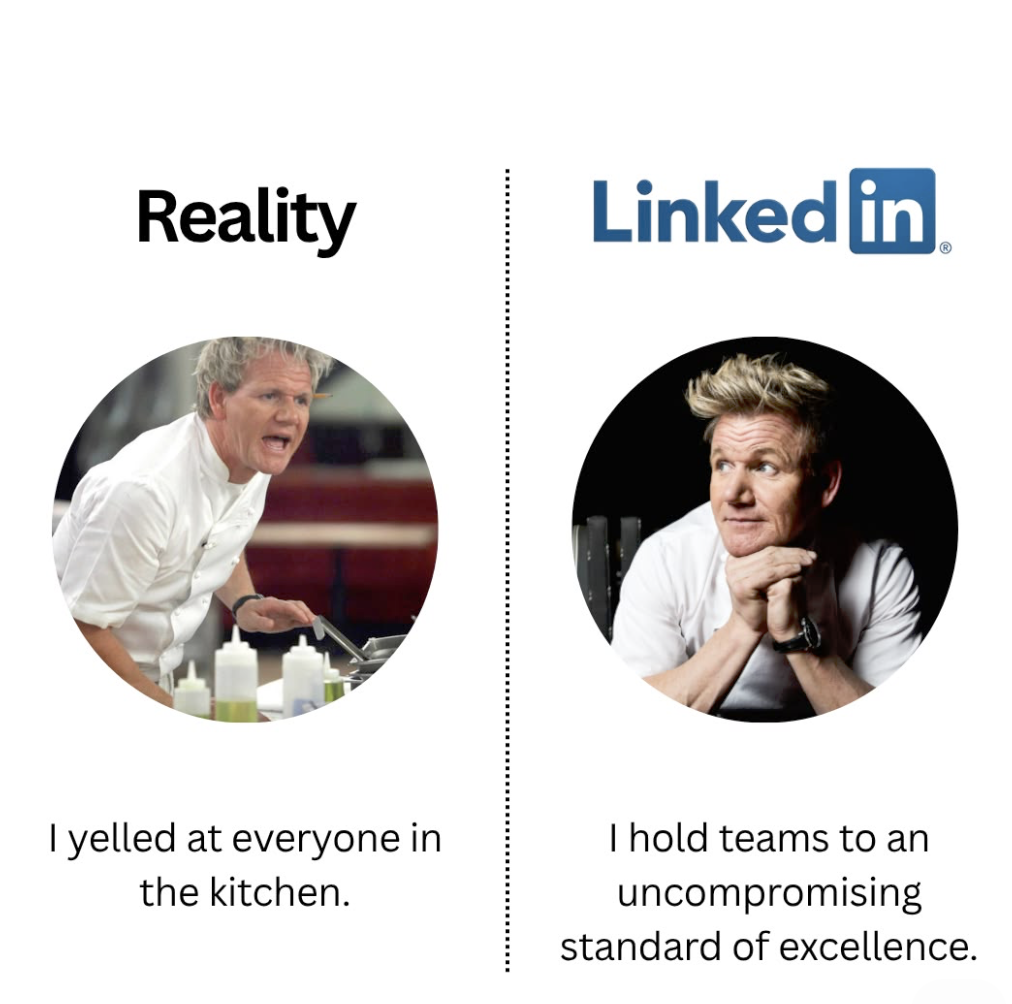
The more I thought about LinkedIn, the more I realised that authenticity online is not as straightforward as it seems.
Most people are not deliberately creating fake identities. Their qualifications, experiences and achievements are usually genuine. However, they are also making decisions about what to share and what to leave out. In other words, they are managing how other people see them.
For example, if someone looks at my LinkedIn profile, they might assume they know who I am based on my education, work experience and skills. However, those things only represent a small part of my life. They do not show my hobbies, interests, fears, personality or everyday experiences.
This is where LinkedIn becomes interesting. It is not necessarily a place where people lie about who they are. Instead, it is a platform that encourages users to focus on a particular version of themselves: the professional version.
This example highlights how social media platforms encourage different forms of self-presentation. The same person can appear completely different depending on the platform they are using. On LinkedIn, people are expected to appear professional, ambitious and employable, while other platforms may encourage a more personal or relaxed version of identity. Rather than being completely fake, these profiles reveal how we adapt ourselves to different audiences and digital environments.
can we really be authentic on LinkedIn?
After exploring Goffman’s ideas of self-presentation, I think the answer is both yes and no. Most users are not creating completely false identities, but they are carefully choosing which parts of themselves to make visible. LinkedIn encourages people to present a professional version of their identity, highlighting achievements, skills and ambitions while leaving other aspects of their lives in the background.
This does not necessarily make LinkedIn fake. Instead, it shows how identity is shaped by context and audience. Just as we behave differently in a job interview than we do with friends, we also adapt the way we present ourselves online. Perhaps authenticity is not about showing everything, but about being honest about the version of ourselves we choose to share.
References :
Goffman, E. (1959) The Presentation of Self in Everyday Life. New York: Anchor Books
Marwick, A.E. and boyd, d. (2011) ‘I tweet honestly, I tweet passionately: Twitter users, context collapse, and the imagined audience’, New Media & Society, 13(1), pp. 114–133.
van Dijck, J. (2013) The Culture of Connectivity: A Critical History of Social Media. Oxford: Oxford University Press.


