

Beauty influencers are among those who promote various products via social media platforms like TikTok and Instagram. For instance, when using TikTok, one is likely to encounter influencers suggesting beauty products and giving reviews. Nevertheless, can one always take their words as they are? There are those who are likely to trust their opinions, but there are others who wonder whether or not the influencers are genuine. This theory by Stuart Hall is quite helpful in analyzing this phenomenon.
In his work, Hall (1980) says that encoding involves constructing a media message with certain meaning. For instance, think of a beauty influencer advertising a foundation on TikTok. She may show the effects of the product and express her liking of it. She is also likely to provide a discount code in an attempt to convince her followers to purchase the product.
By doing this, she sends a message about the quality of the foundation and its authenticity. According to Lou & Yuan (2019), the credibility of an influencer may affect the level of followers’ belief in advertisements.
Three Ways Audiences Decode Influencer Advertising
1.Dominant Reading:
Some audiences totally believe in the message from an influencer. For instance, a person that has been following her on YouTube for several years would believe that the foundation is worth buying. Moreover, he/she would read lots of positive feedbacks and assume that other clients were satisfied with the product. Thus, this audience would accept the message and trust the product.
2.Negotiated Reading:
Another group of viewers would accept the message to some extent and doubt about it. For instance, people would appreciate how the product is presented but at the same time realize that this video is paid. They would also find some comments strange because they seem to be too alike. Thus, people would not buy the product right away and research it in other places.
3.Oppositional Reading:
Others may oppose the intended reading of the video. They know what the influencer is trying to achieve through creating an impression of trustworthiness, but they know that the video is basically a marketing technique. They know if there are any positive comments that are fake, they would think that it is an attempt to manipulate consumer decision making. As per Lim et al. (2025), fake reviews on social media can lead consumers astray and manipulate their purchase decisions. Thus, such viewers will not accept the message and will distrust the recommendation.
All these varied readings are examples of how audiences are not passive receivers. The opinion of the audiences could be affected based on their experience and knowledge about advertising.
Another crucial problem in such videos is fake comments. Brands or influencers might hire paid comments to make the video more trustworthy and popular. However, viewers who do not recognize these comments as fake would think that the product gets genuine recommendations from many people.
Moreover, the labels used in advertising may affect audience understanding of such advertising. According to Evans et al. (2017), the use of obvious advertisements helps viewers identify advertisements. However, just because a viewer recognises an advertisement does not mean he or she rejects it.
It is evident from the above that both the advertisement itself and the comments section may affect audience understanding of the product.
In summary, according to Hall’s theory of encoding and decoding, audiences may interpret an influencer advertisement in different ways. Though an influencer has the ability to create a message making products look reliable, he or she cannot fully dictate how audiences will decode it.
References:
Evans, N.J., Phua, J., Lim, J. and Jun, H. (2017) ‘Disclosing Instagram influencer advertising: The effects of disclosure language on advertising recognition, attitudes, and behavioral intent’, Journal of Interactive Advertising, 17(2), pp. 138–149.
Hall, S. (1980) ‘Encoding/decoding’, in Hall, S., Hobson, D., Lowe, A. and Willis, P. (eds.) Culture, Media, Language. London: Hutchinson, pp. 128–138.
Lou, C. and Yuan, S. (2019) ‘Influencer marketing: How message value and credibility affect consumer trust of branded content on social media’, Journal of Interactive Advertising, 19(1), pp. 58–73.
Lim, W.M., Agarwal, R., Mishra, A. and Mehrotra, A. (2025) ‘The rise of fake reviews: Toward a marketing-oriented framework for understanding fake reviews’, Australasian Marketing Journal, 33(2), pp. 178–198.
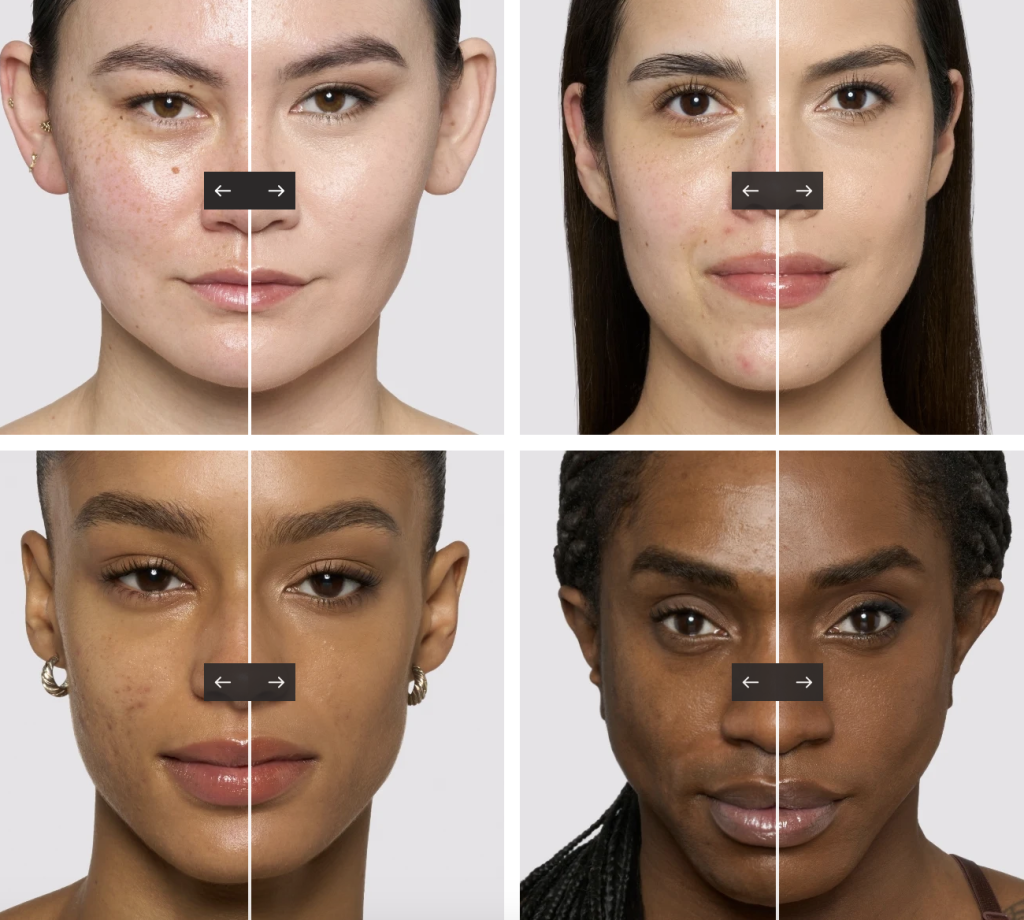
Fenty Beauty (n.d.) Pro Filt’r Soft Matte Longwear Foundation [Online images]. Available at: https://fentybeauty.com/products/pro-filtr-soft-matte-longwear-foundation-100 (Accessed: 16 November 2026).


