
In the digital age, people are able to produce content related to themselves on the internet, such as their own attitudes, personalities and so on. Everyone has their own digital identity which is not only defined by offline relations, but shaped by what we display across social media. This phenomenon aligns closely with Erving Goffman’s theory in The Presentation of Self in Everyday Life. His dramaturgical theory shows that social life is a series of performances where individuals manage impressions to shape how others see them. In his framework, the “front stage” is where we perform; the “back stage” is where we drop the act. Today, social media is the ultimate front stage.
It is actually a precious chance for global communication and self-expression. Everyone has the right to speak and display on social media. They can show their own opinions and present themselves. This phenomenon has turned the internet into a place of diverse ideas and voices, where knowledge flows freely. Individuals can access more information, encounter new perspectives and broader horizons. For me, I actually get benefits from social media. I learn more media theories and shooting skills from the internet than I can offline.
However, at times, digital identity seems to be self-expression, but it is often self-performance. People manage posts, filter photographs and adopt different personas on different platforms, so that the audiences see what content producers want them to see.
Take “morning routine” trend on Instagram as an example, search any of these tags and you get content about “5am wake-ups” and self-disciplined life. It seems like creators are sharing their natural mornings and presenting their personas as, for example, a woman who always gets up early, but the presented content is carefully designed, studiously staged and edited before reaching the audience. Sometimes it may differ dramatically from their reality, for instance, the video is about daily morning routine of a woman who gets up at 5 a.m., whereas this video may be shot in the afternoon and its creator does not actually gets up at 5 a.m. everyday.
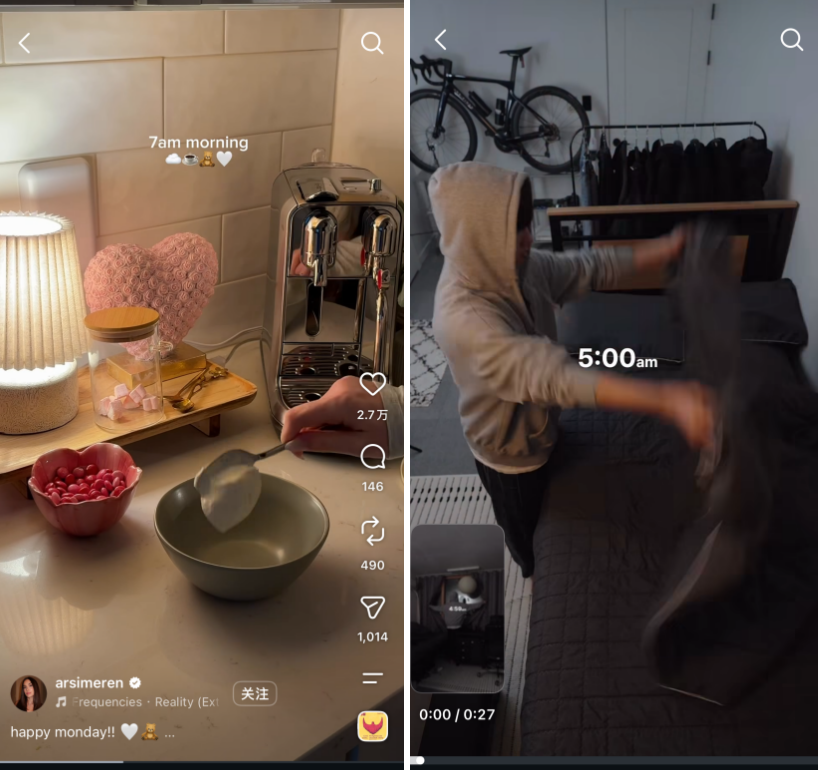
Constantly exposed to highlight reels, audience often fall into a trap of social comparison. When scrolling these videos, they may perceive others as more energetic, disciplined and productive people and unaware that these clips are highly screened and heavily edited. They compare their messy and unfiltered real lives with high-traffic posts. The comparison brings the feelings of negative and less energetic and a sense of inadequate. Then, people start to feel anxious and guilty about the gap between perfect life and reality.
Personally, I sometimes feel this gap. When I view these disciplined daily routine on social media, I feel like I am inadequate and not disciplined enough. But I realised it is just the “front stage” Goffman talked about. Understanding this eases the anxiety slightly.
In the end, the performance is often polished on social media and can cause anxiety. Perhaps the first step to digital well-being is simply realising that what we see online is just a performance.
Reference
Goffman, E., (1959). The presentation of self in everyday life. Doubleday.


