
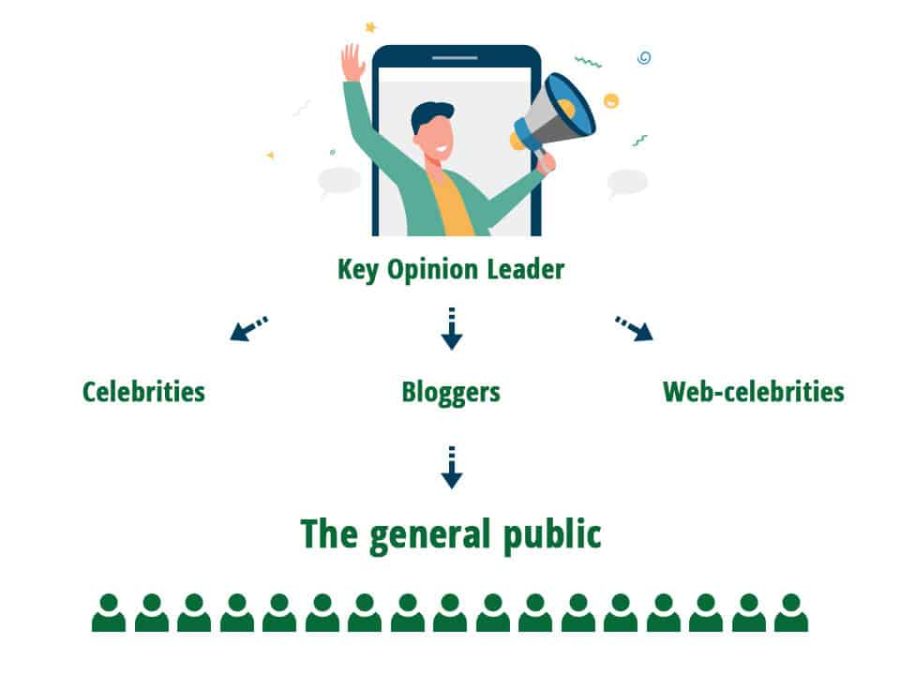
Opinion leaders have existed forever and they’ve taken various forms over time. Essentially the two-step flow theory states that mass media outlets disseminate information and then “opinion leaders” take that information and spread it to the masses. I think this is a pretty simple theory that definitely covers a certain degree of the spread of information in our world. Religious leaders, social media influencers, elders, talk show hosts and podcasters all serve as opinion leaders.
I cannot conceptualise this to be as simple as just a two-step process if opinion leaders can be bought out and controlled by other groups. A corporation, for example, can pay off someone serving as an opinion leader and skew the message shared. The appeal of the opinion leader is that this person is a more trusted source compared to the direct information coming from the media. When a capitalist society asks you to put money on top of all, these leaders have increased incentive to let go of what their opinion truly is.
In the current age of highly accessible information through the internet, opinion leaders just are not the same as they were 10-15 years ago and definitely different than a century ago. When there was not as much easily accessible information about any singular topic an opinion leader was almost an end-all be-all for a given topic.
Social media stars or YouTubers with good intentions may advertise something that they didn’t know was harmful, something that they didn’t understand was harmful. Sometimes people may not feel they have the choice to decline certain offers from businesses that they may not agree with.

Another question that comes up; Are these algorithms becoming opinion leaders? Oftentimes I open Spotify to listen to some music before I’ve decided what it is I want to listen to. Spotify nearly decides that for me by showing me a certain variety of options. It’s telling me what it is that I should listen to it this moment, while I could spend some questioning what it is I really want to listen to, we are often in a rush, or so quickly distracted by all the options in front of us. Why should I listen to what spotify thinks the best representative albums of a subgenre are? Or what recent releases are promoted? They have a stake in this, they’re making money and want me to stay loyal to the platform. Can they be a true opinion leader if they also are able to profit from us? That’s why I think that in this age it’s hard to understand opinion leaders so simply.

Maybe its better understood that there are high-scale opinion leaders, such as public health professionals and politicians and then smaller-scale ones, such as influencers. Regardless of the scale, these opinion leaders can still corruptly skew information to suit their desires, usually influenced by money. — Anyway, I think it would be better stated as a Four-step Flow theory in this modern time. Source media -> opinion leaders -> influencers -> individuals.


