
Think about how long it’s been since you last met your friends offline. The emergence of social media has, to some extent, bridged the physical distance between people and made it easier to stay in touch with friends. But as our ways of communication change, will social relationships themselves also change?
“The medium is the message” is McLuhan’s core theory. He argued that the real message of any medium or technology lies in the changes it brings to the scale, pace or pattern of human affairs (McLuhan, 2006). The Internet does not create human social needs, but expands the scope of social interaction. Social media gives us the opportunity to meet people from different regions and countries, and making friends no longer depends entirely on school, work and the daily life environment. Most importantly, social media has changed the way we maintain and build relationships with others, and reduced the cost of maintaining contact. In the past, we might have needed to take the initiative to ask our friends about their recent situation, but now we can know their daily lives by browsing their stories. In the face of changes in social patterns, we need to consider whether this “low-cost” interaction is changing our understanding of friendship and how we maintain relationships.
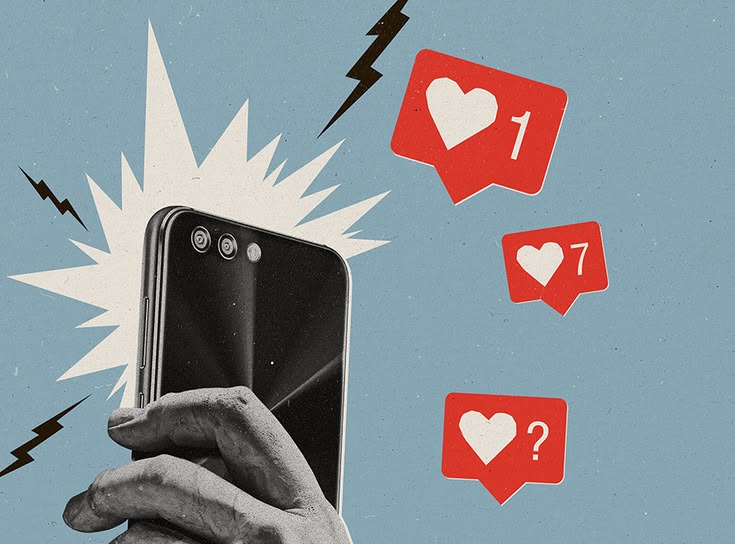
Social media transforms interpersonal interaction into visible digital feedback such as likes, comments and replies, which gradually leads us to understand and judge social relationships through these digital interactions. We may begin to use whether a friend likes or comments as a way of measuring how close a relationship is. These digital interactions cannot fully reflect actual relationships. We may pay too much attention to the forms of interaction provided by social media and overlook how it shapes our understanding of social relationships.
I remember a time when my friend hadn’t liked my posts for a while, and I started wondering whether something was wrong between us. From the perspective of McLuhan’s theory, this reflects how social media can shape our perceptions: I judged our friendship based on a single like. Later, when I met my friend, I realised that she had been very busy at that time and hadn’t been paying much attention to social media posts. Since then, when something similar happens, I prefer to contact my friends directly rather than rely on digital feedback. This experience also highlights a limitation of McLuhan’s theory. Writing long before social media, he stressed the role of technology in shaping society, but may gave less attention to users’ agency and their ability to interpret media in different ways.
As media evolve, social relationships change accordingly. Social relationships become easier to maintain, but also more easily misunderstood. McLuhan reminds us to pay attention to how the media shape our perceptions, but we still have the agency to decide how we respond to the media.
Reference:
McLuhan, M. (2006) ‘The Medium is the Message’, in Durham, M.G. and Kellner, D.M. (eds.) Media and cultural studies: keyworks. Rev. ed. Oxford: Wiley-Blackwell, pp. 107-116


